
“How much will the set cost?” is usually one of the first practical questions on an advertising film, branded-content shoot or campaign in Mumbai. It is also one of the hardest questions to answer from a moodboard alone.
A film set is not priced like a conventional interior. The same 300-square-foot room can cost very different amounts depending on whether it needs two camera-facing walls or four, whether the ceiling enters frame, whether surfaces are paint or layered scenic finishes, whether furniture is rented or custom-built, and whether the set has to be installed overnight.
Quick answer: for Mumbai advertising-film work, a tightly scoped set-dressing or location-transformation brief may begin below ₹1.5 lakh, while a more substantial constructed environment can move into several lakhs. Larger multi-set, high-finish or fabrication-heavy briefs can go well beyond that. The useful number comes from the scope—not the square footage alone.
The ranges below are indicative planning bands for the production-design / art-department scope, not fixed quotations. Location rent, camera and lighting, cast, production crew, post-production and GST are separate unless specifically included in a project estimate.
Indicative film-set budget bands in Mumbai
| Indicative art / set budget | What this may typically cover | Typical approach |
|---|---|---|
| ₹75,000–₹1.5 lakh | One contained environment where the existing location already does most of the work | Set dressing, props, soft furnishings, paint touch-ups, graphics and small scenic interventions |
| ₹1.5–₹4 lakh | A stronger location transformation or a compact purpose-built set | Partial wall work, finishes, custom elements, furniture, props, art dressing and installation |
| ₹4–₹8 lakh | A substantial built environment or multiple connected spaces | Scenic walls, platforms, custom surfaces, fabricated details, larger prop scope and more labour |
| ₹8–₹15 lakh+ | Multiple sets, larger footprints, premium finishes, complex branded builds or compressed execution | Full scenic construction, fabrication, specialist finishes, custom furniture/props, logistics and installation teams |
These bands are useful for an early conversation, but they should not be treated as a rate card. A visually simple set can become expensive because of access, height, overnight installation or custom fabrication. A visually rich frame can sometimes be achieved economically when the location already provides the right architecture and the design is concentrated only where the camera sees it.
Why there is no reliable “per square foot” price for a film set
Square-foot pricing sounds convenient because it works reasonably well for some categories of conventional interior work. It is much less reliable for production design.
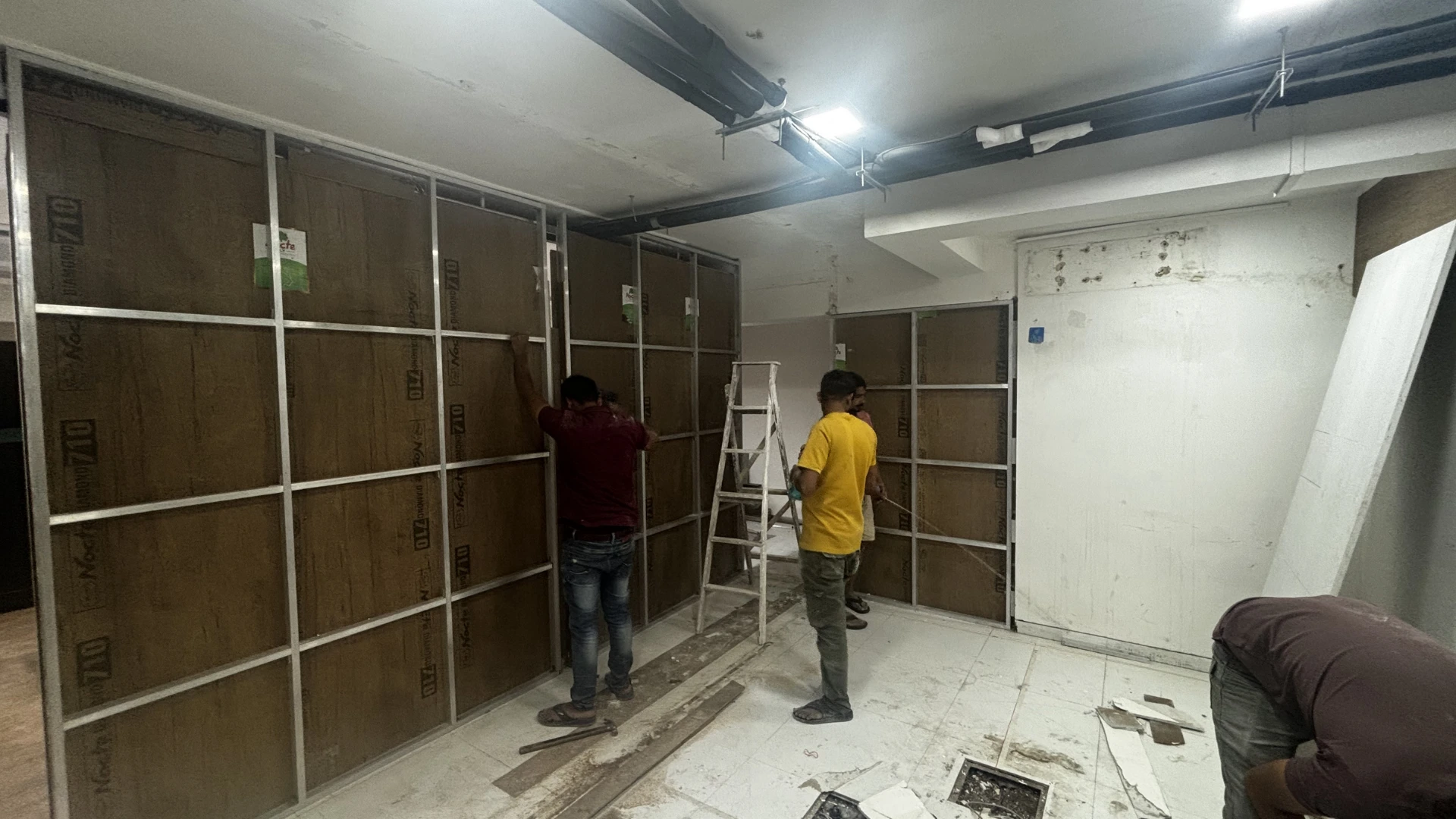
A 12 ft × 15 ft living-room set may need only two camera-facing walls, borrowed furniture and a painted floor. Another set with the same footprint may require four walls, working doors, a practical window, ceiling treatment, custom cabinetry, layered scenic texture, removable sections for camera access and overnight dismantling.
The floor area is identical. The production requirement is not.
For film-set budgeting, it is more useful to assess:
- how many surfaces will actually enter frame;
- the height and structural requirement of those surfaces;
- how much of the location can be retained;
- the quality and complexity of visible finishes;
- custom furniture, props and branded elements;
- installation and dismantling conditions;
- how many shoot days or set changes are involved;
- and how much time is available between approval and shoot.
This is why Set Craft normally develops the budget after understanding the script, camera requirement, location and visual direction rather than quoting a generic set-construction rate. You can see the broader approach on our Set Design & Construction in Mumbai page.
The seven things that usually change the set budget most
1. Build from zero vs transform an existing location
This is often the biggest early decision. If a location already has useful architecture, good proportions and acceptable surfaces, the art department can concentrate on colour, furniture, props, window treatment and the camera-facing areas.
A full build gives much more control, but it also introduces flats, framing, platforms, scenic finishing, transport, labour, installation and strike.
For many advertising films, the best answer is a hybrid: retain what works, conceal what does not, and build only the elements that materially improve the frame.
2. Number of camera-facing surfaces
A set that looks complete from the doorway may be inefficient for camera. Production design should begin with the planned angles. If only two walls and a portion of the floor are visible, spending on unseen surfaces rarely improves the film.
Conversely, a moving camera, wide lens or 360-degree blocking can quickly turn a simple set into a much larger construction scope.
3. Finish quality
Paint is not one finish category. A flat painted wall, a polished surface, aged lime plaster, fluting, timber veneer, metallic trim, patterned wallpaper and a hand-worked scenic texture all require different materials, labour and time.
The question is not simply whether the surface looks premium in person. It has to hold up under the intended lighting and lens.
4. Furniture and props
Art budgets can shift substantially depending on whether furniture is available on rental, needs modification, has to be sourced from multiple vendors or must be fabricated specifically for the frame.
Small props can also become a meaningful cost when a set requires a very particular cultural, period, institutional or branded language.
5. Fabrication and custom elements
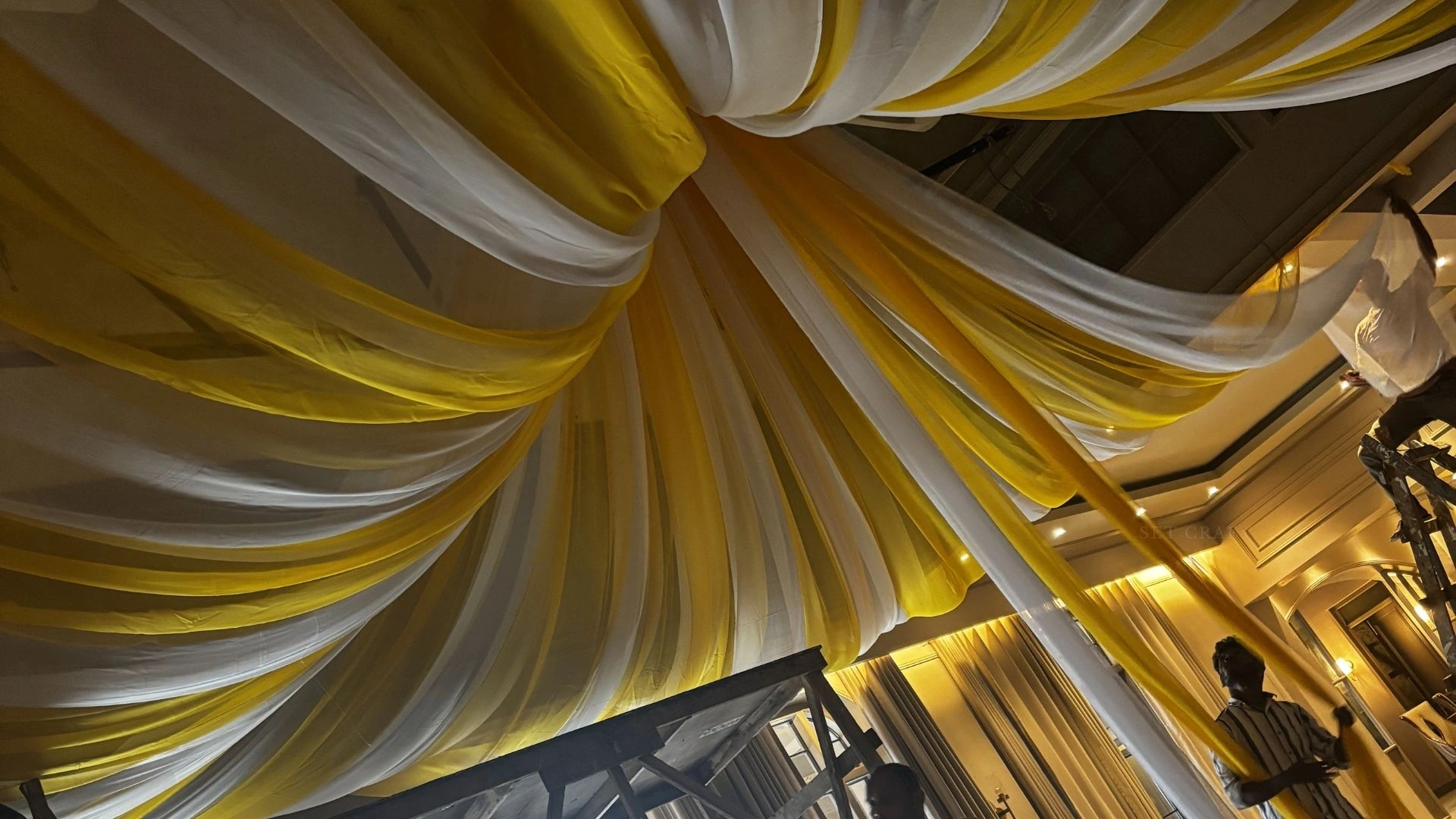
Custom arches, counters, shelving, wardrobe systems, branded display units, practical windows, platforms, doors, special mouldings and scenic structures make a set distinctive—but they also add carpentry, metalwork, finishing and installation time.
6. Lead time
A design that is straightforward with ten working days can become expensive when it has to be executed in three. Rush procurement, overtime, parallel teams and last-minute transport add cost without necessarily adding visual value.
Production design is most economical when the art department enters before the key location, construction and prop decisions are locked.
7. Installation, access and logistics
A set built inside a ground-floor studio with continuous access is a different logistical exercise from a set that has to travel through a service lift, install overnight inside an operational office or be completed within a restricted venue window.
Transport, loading, crew movement, electrical access, protection of an existing location and dismantling all affect the final number.
Location dressing vs location transformation vs full set build
These three scopes are often confused, but they create very different budgets.
Location dressing
The architecture is largely accepted as it is. The production-design work is concentrated on furniture, props, textiles, art, plants, practical lighting, graphics and small surface corrections.
Location transformation
The existing shell is useful, but the visual identity needs to change. This may include repainting, temporary wall treatments, curtains, fabricated panels, floor overlays, custom furniture, signage, props and concealment of unwanted features.
Full set build
The environment is constructed specifically for the film. This gives maximum control over proportions, colour, movement, camera access and continuity, but the budget must carry scenic construction, finishing, installation and dismantling.
Our Advertising Film Production Design page explains how we decide between these approaches during design development.
Where a film-set budget actually goes
A client may see the finished sofa, painted wall and props. The budget also has to cover everything that made those visible elements possible.
- Production design and art direction: research, visual direction, spatial decisions and supervision.
- Drawings and visualisation: layouts, elevations, dimensions and 3D views where required.
- Carpentry and fabrication: flats, platforms, frames, counters, custom furniture and scenic structures.
- Surface finishing: paint, texture, wallpaper, laminate, veneer, fabric, ageing and scenic treatments.
- Props and furniture: rental, purchase, modification, transport and returns.
- Graphics and branded elements: artwork, prints, vinyl, signage and fabricated logos.
- Labour and logistics: carpenters, painters, helpers, loaders, vehicles and site movement.
- Installation and strike: assembly, finishing, shoot-day corrections and dismantling.
How to reduce a set budget without making the film look cheaper
The most effective savings usually come from design decisions, not from cutting every vendor rate.
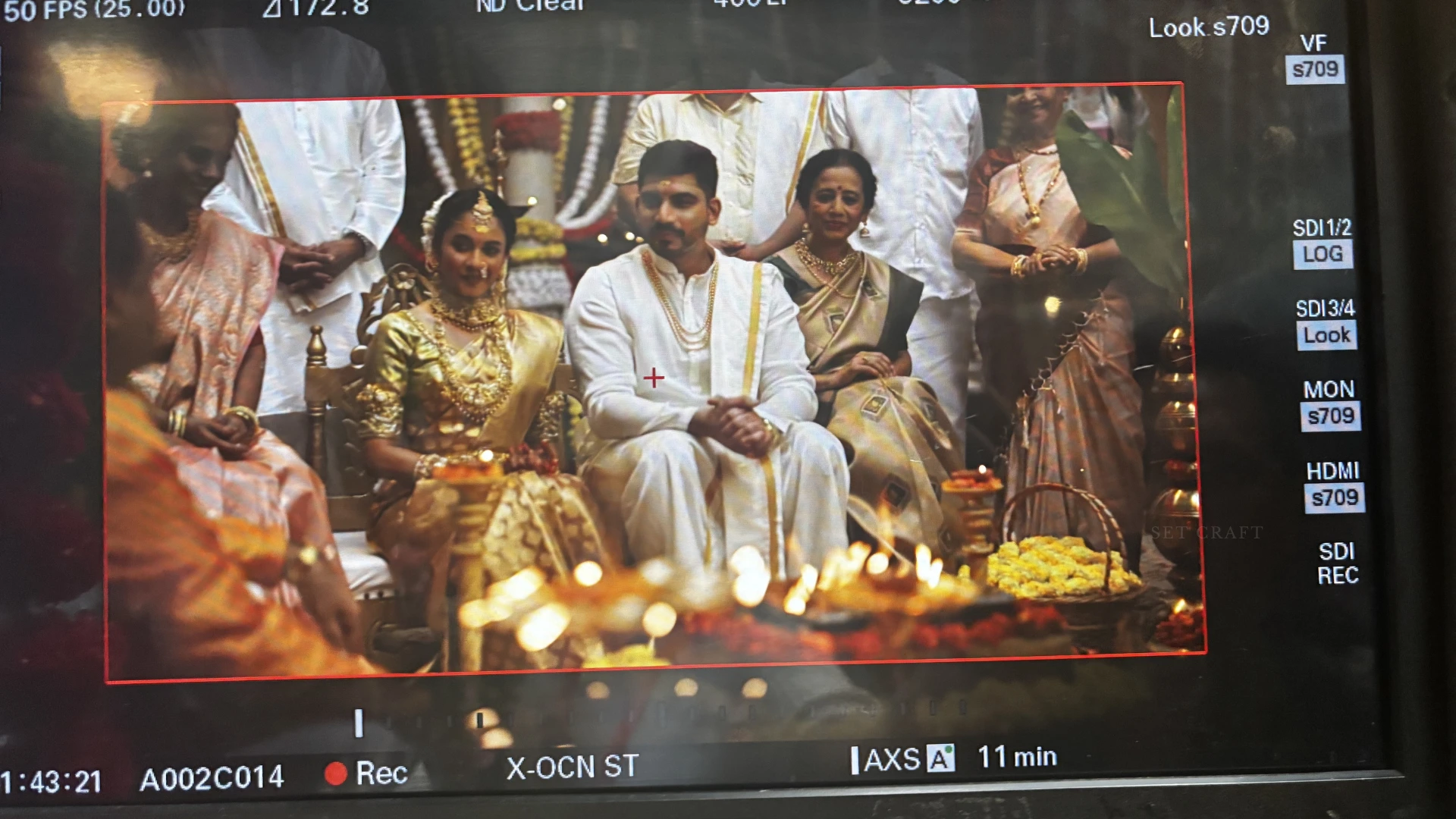
- Lock the hero angles early. Build and finish what the camera actually needs.
- Choose the location strategically. Paying slightly more for the right shell can save far more in transformation work.
- Reuse a visual system across scenes. Modular walls, furniture and props can sometimes be redressed instead of rebuilt.
- Prioritise the hero surfaces. A strong wall treatment, floor relationship and lighting direction can carry more value than dozens of small decorative purchases.
- Approve materials before fabrication. Late finish changes are expensive because they affect labour, procurement and schedule at the same time.
- Give the art department enough lead time. Time creates sourcing options; compressed schedules create premiums.
What should you send for an accurate set estimate?
An early estimate becomes much more useful when the production designer has the following:
- script, treatment or storyboard;
- number of sets / environments;
- location photographs or recce video;
- approximate dimensions if available;
- director / agency visual references;
- likely camera movement and hero angles;
- shoot city and venue conditions;
- design approval date and shoot date;
- and an indicative working budget.
A budget is most productive when it becomes part of the design process rather than a number added after the design has already been locked. Our Design Process & Execution page shows how Set Craft moves from brief and recce through design, fabrication and installation.
So, how much should you budget?
For a Mumbai advertising-film set, there is no single correct number. If the location already provides the architecture and the brief is predominantly dressing-led, the art scope can remain relatively contained. Once the frame depends on custom walls, scenic finishes, fabricated furniture, multiple environments or compressed installation, the budget rises quickly.
The better question is:
What does the camera need the environment to do—and what is the most efficient way to create that?
That is the point at which a useful set budget starts to emerge.
Film set cost FAQs
Is a production designer’s fee included in the set-construction budget?
Not necessarily. Production-design fees, design development, set construction, props and execution can be quoted as separate lines or consolidated depending on the project. The scope should state clearly what is included.
Is studio or location rent part of the set budget?
Usually not unless the estimate specifically includes it. Studio hire, location permissions, electricity and venue charges should be separated from the art-department budget so both numbers remain clear.
Can a location transformation be cheaper than building a set?
Often, yes—but only when the location already solves the important architectural and camera requirements. A poor location can become more expensive once concealment, repainting, temporary construction, restrictions and restoration are added.
How early should production design start?
Ideally after the script or director’s treatment is clear but before the key location, build and prop decisions are locked. Early involvement gives more room to solve the frame through planning instead of expensive last-minute corrections.
Does Set Craft handle both design and set construction?
Yes. Depending on the project, Set Craft can handle production design, set design and construction, art direction and set dressing, or a combined design-to-execution scope.
Continue exploring Set Craft
Production Design ServicesFrom visual research and spatial direction through final-frame execution.
Selected ProjectsAdvertising films, wedding campaigns, studio environments and spatial work.
Request a Set EstimateSend the script, location, dates and indicative budget for an initial discussion.