Set Craft / Design Process
From brief to build, without losing the design on the way.
Set Craft connects concept, spatial planning, design development, fabrication, sourcing, installation and final styling as one continuous process — whether the project is an advertising-film set, a content studio or a customer-facing environment.
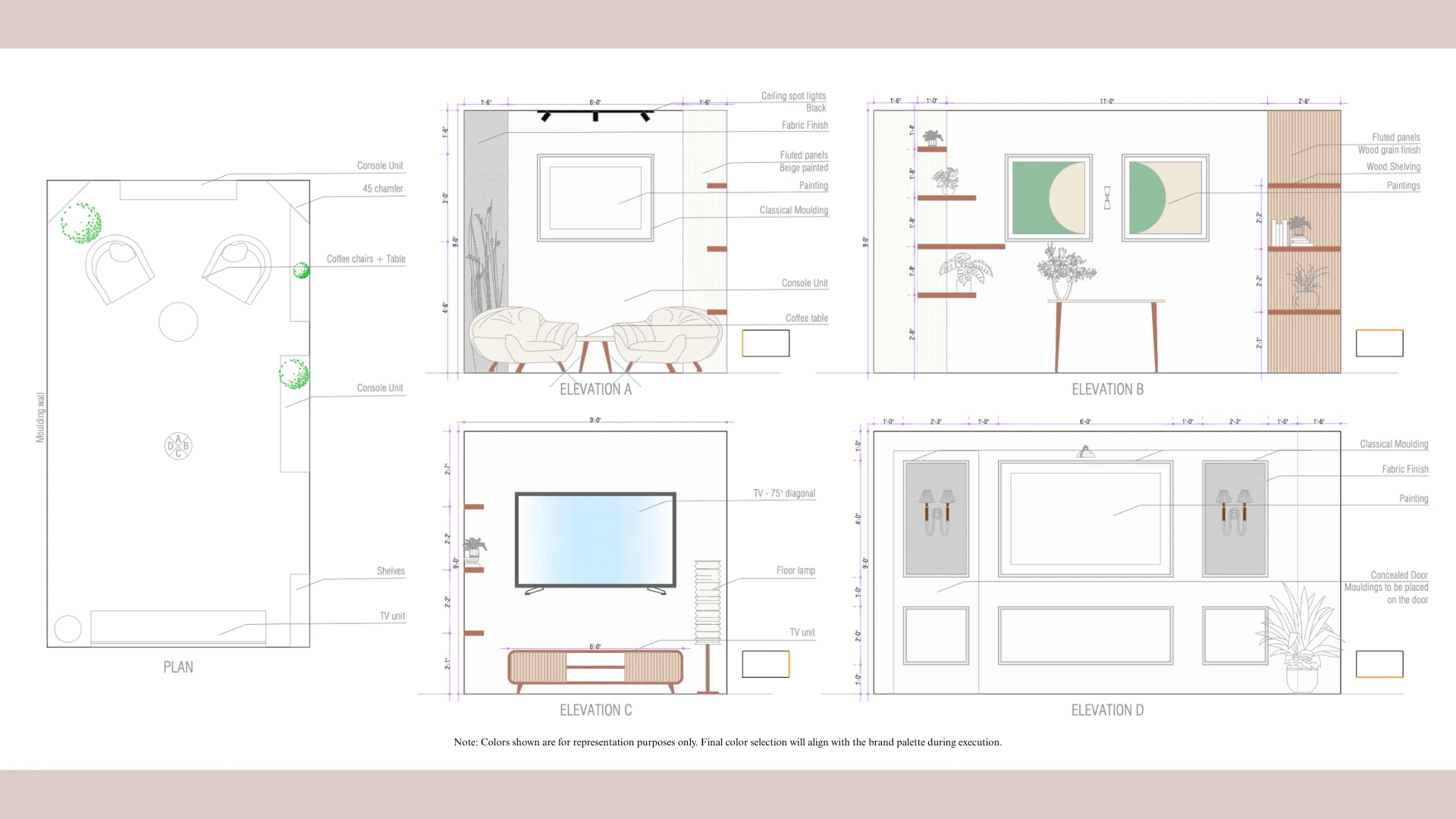
One process / different project types
The deliverables change. The discipline does not.
A temporary film set may need fast design decisions and intensive shoot-day coordination. A podcast studio may need acoustic layers, camera testing and repeatable operating logic. A sales gallery or experience centre may need visitor flow, display integration and durable handover.
What remains constant is the need to make the important decisions early, document them clearly and keep creative direction connected to the people who will fabricate and install the work.
Five working stages
One continuous path from decision to delivery.
Brief, context & requirements
We establish the story or business objective, users, audience, site or location, programme, schedule, budget, approvals and technical constraints before design begins.
Research, concept & spatial strategy
Visual references, cultural or brand research, zoning, camera or visitor journey, material direction, palette and the core experience of the environment are developed together.
Design development
Layouts, elevations, visualisations, furniture, props, display systems, backgrounds, lighting intent, acoustic needs and fabrication details are resolved to the level the project requires.
Fabrication, sourcing & installation
Scenic work, carpentry, custom elements, furniture, props, finishes, technical systems, transport and on-site installation are coordinated against the approved direction.
Styling, testing & handover
Film sets are refined through the camera; studios are tested for repeated shooting; longer-life spaces are checked for visitor flow, presentation, usability and final handover.
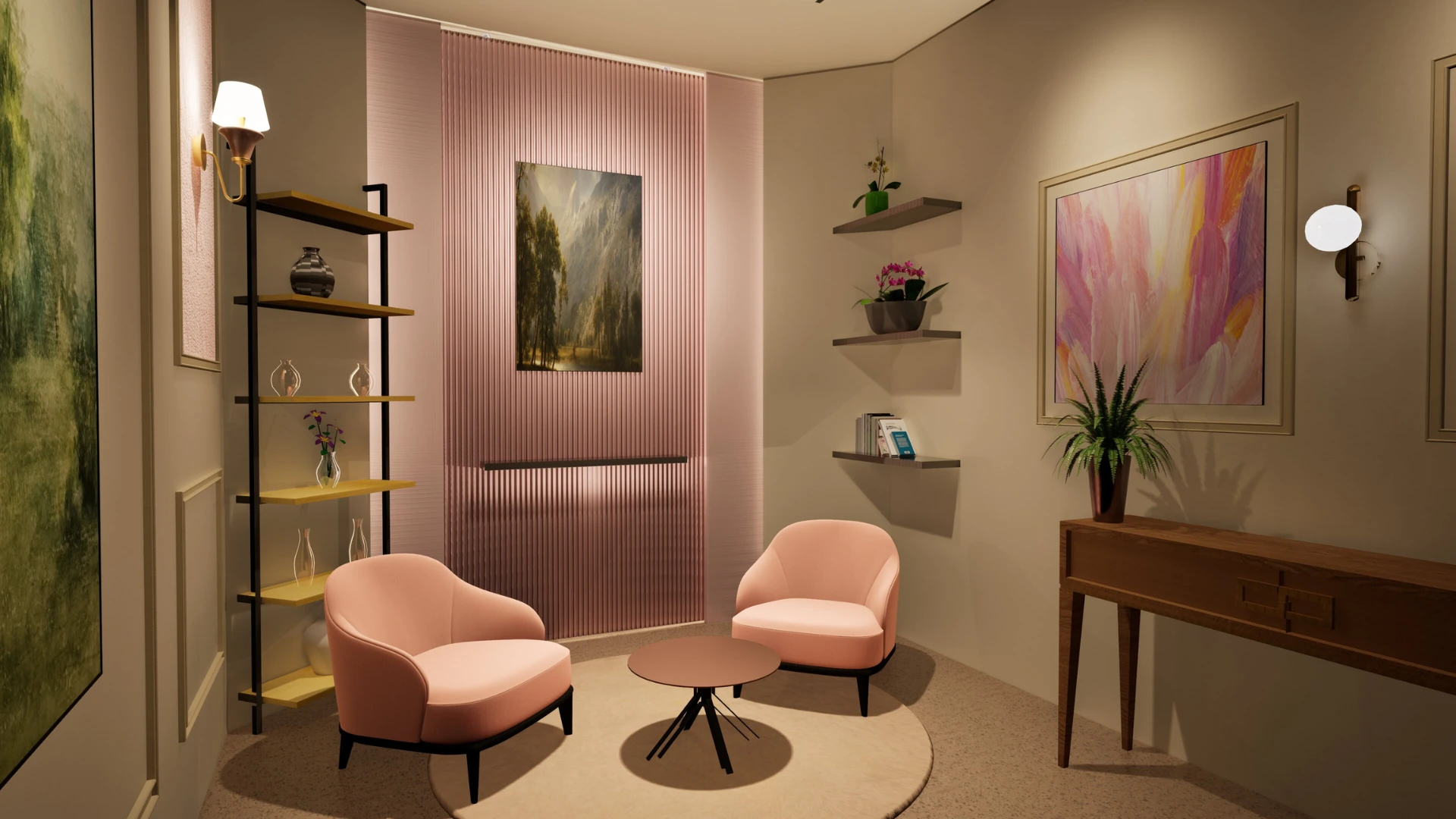
Design becomes physical
Drawings, visualisation and site work should tell the same story.
The purpose of design development is not to produce more documents. It is to remove uncertainty before expensive decisions reach the workshop or site.


What changes by project type
Camera, performance and speed.
Location strategy, lens depth, blocking, scenic build, props and shoot-day continuity drive the process.
Repeatability and technical integration.
Camera positions, acoustics, lighting, storage, background variation and long-term operating workflow become central.
Visitor journey and durable use.
Arrival, display, technology, hospitality, consultation, maintenance and handover shape the design decisions.
Before execution begins
The most expensive mistakes are usually unresolved decisions.
Separate camera-facing, visitor-facing or performance-critical work from elements that can remain, be rented or be simplified.
Custom fabrication, alignment, technical coordination and repeatable details should be documented before site work starts.
Furniture, specialist props, printed graphics, hardware, lighting, cultural objects and custom finishes can become schedule risks if identified late.
Creative and commercial decision-makers should be clear so design changes do not stall fabrication or create avoidable rework.
What helps us start
You do not need a finished design deck before speaking to us.
- Script, creative deck or business brief
- Location photographs, recce video or floor plan
- Target shoot, installation or opening date
- Number of sets, rooms, zones or content formats
- Camera, acoustic, display or interactive requirements
- Must-have references versus flexible references
- Indicative working budget
- Who will approve creative and commercial decisions
Common questions
Design & execution FAQs
Can Set Craft handle only design, without execution?
Yes. The scope can stop at concept and design development when the client already has an execution team. The deliverables are then defined around what that team needs to build accurately.
Can you execute from an already approved design?
Yes. We first review the drawings, material references, dimensions and site conditions, then flag any practical changes needed for fabrication or installation before costing.
How early should Set Craft be involved?
Ideally before key locations, build methods, technical systems or major furniture and prop decisions are locked. Earlier involvement gives more opportunity to solve the project efficiently rather than correcting it later.
Does every project need 3D visualisation?
No. Some projects can be resolved through references, layouts and elevations. 3D is most useful where spatial relationships, custom fabrication, client approvals or camera views need to be tested before execution.
Set Craft / Mumbai + India
Ready to move from brief to build?
Send the project type, location, target dates, available material and working budget. We can define the design stages, deliverables and execution scope from there.