
Wedding and festive films are often described in a brief with familiar words: warm, celebratory, premium, authentic, colourful. The difficulty begins when those words have to become a physical environment that works for the script, the camera, the brand and the culture at the same time.
Production design for these films is not simply about adding flowers, drapes or lights. It is about deciding what the audience should understand about the family, the region, the occasion and the emotional tone before a character even speaks. For advertising films and branded content, that environment also has to support product moments, multiple setups, compressed shoot schedules and a consistent visual identity.
This guide looks at what should be planned before a wedding or festive film goes on floor, especially when the brief involves culturally specific Indian environments. For a broader overview of Set Craft’s work in this space, see our Wedding Set Design page.
Start with the story, not the decoration
The first useful question is not “What should the set look like?” but “What is happening in this space?” A bridal preparation scene, a family argument, a dance sequence and a ceremonial ritual may all take place within the same wedding world, but they need very different spatial conditions.
Before design development begins, it helps to map the film into moments: arrivals, rituals, family gatherings, private conversations, music or dance, product interaction, transition shots and hero frames. From there, the production designer can decide which spaces need to feel expansive, which need intimacy, where depth is required behind the actors, and which visual elements should repeat across scenes to hold the world together.

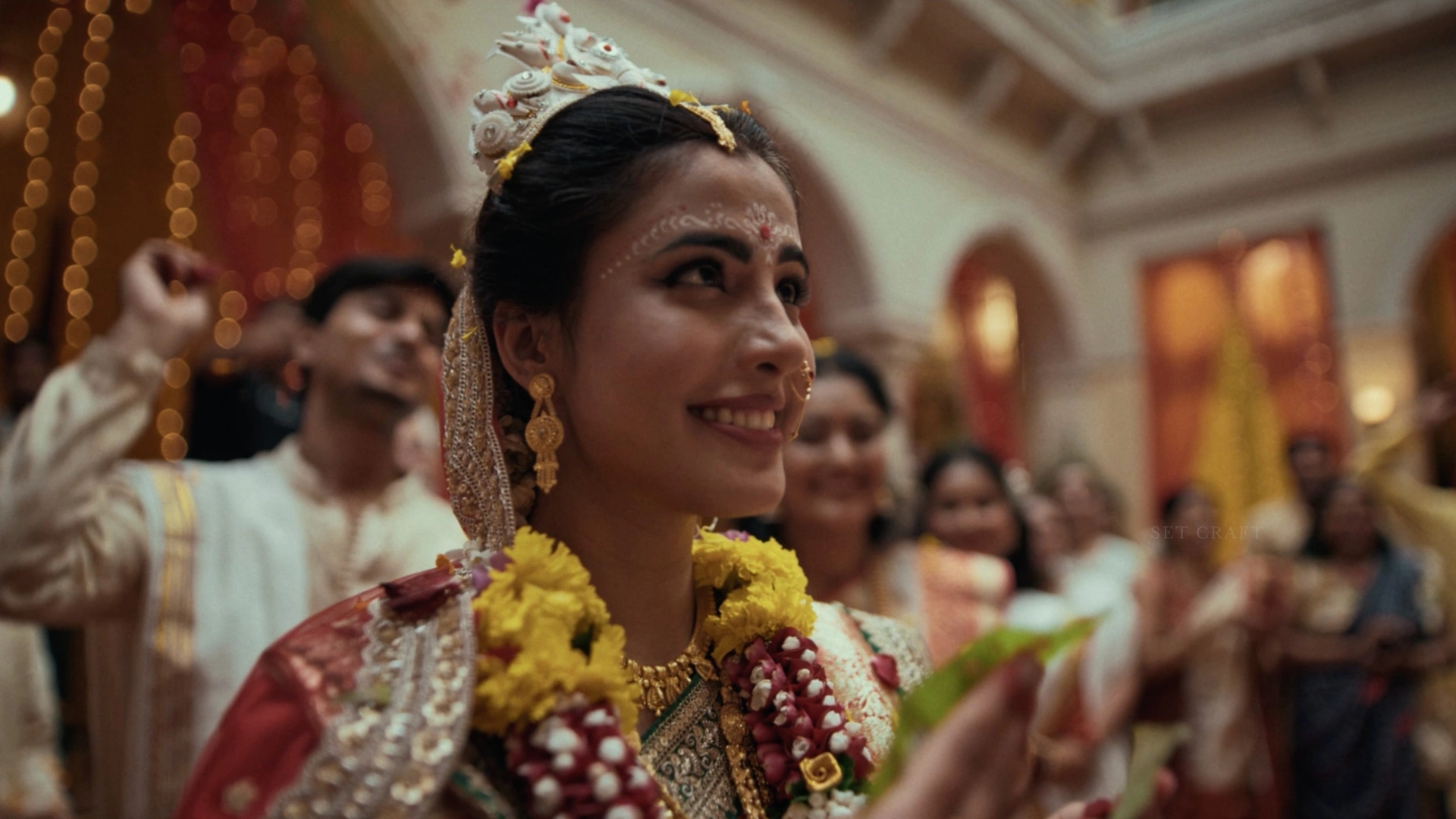
Cultural specificity matters more than generic “Indian wedding” styling
A wedding film becomes more believable when cultural references are treated as part of the design system rather than as surface decoration. That can include ritual objects, floral language, textiles, furniture, ceremonial geometry, colour associations, architectural details and the way guests occupy a space.
For the Bengali Wedding production design for Vivo, ceremonial props and visual references were developed around Bengali traditions. In the Manipuri Wedding set, spatial treatment and fabric structures had to support a very different cultural and performance language. The Two States wedding film required Punjabi and Malayalam references to coexist within one coherent visual world.
This kind of research prevents the film from falling into a generic “wedding décor” vocabulary. It also helps directors and agencies decide which cultural elements are essential to the narrative and which can remain quieter in the frame.


Design the wedding as an ecosystem, not one backdrop
Many commercial wedding films need more than a single ceremony setup. A believable wedding world may include an entrance, corridor, bridal room, lounge, family seating area, ceremonial zone, dining or celebration space, exterior dressing and transition areas between them.
When these are designed independently, the film can feel fragmented. A stronger approach is to create one visual system and let each space interpret it differently. A fabric treatment may repeat at different scales. A floral colour may move from the entrance to the bridal room. The same lighting temperature may connect an exterior with an interior. Props can carry small cultural cues from one scene to another.

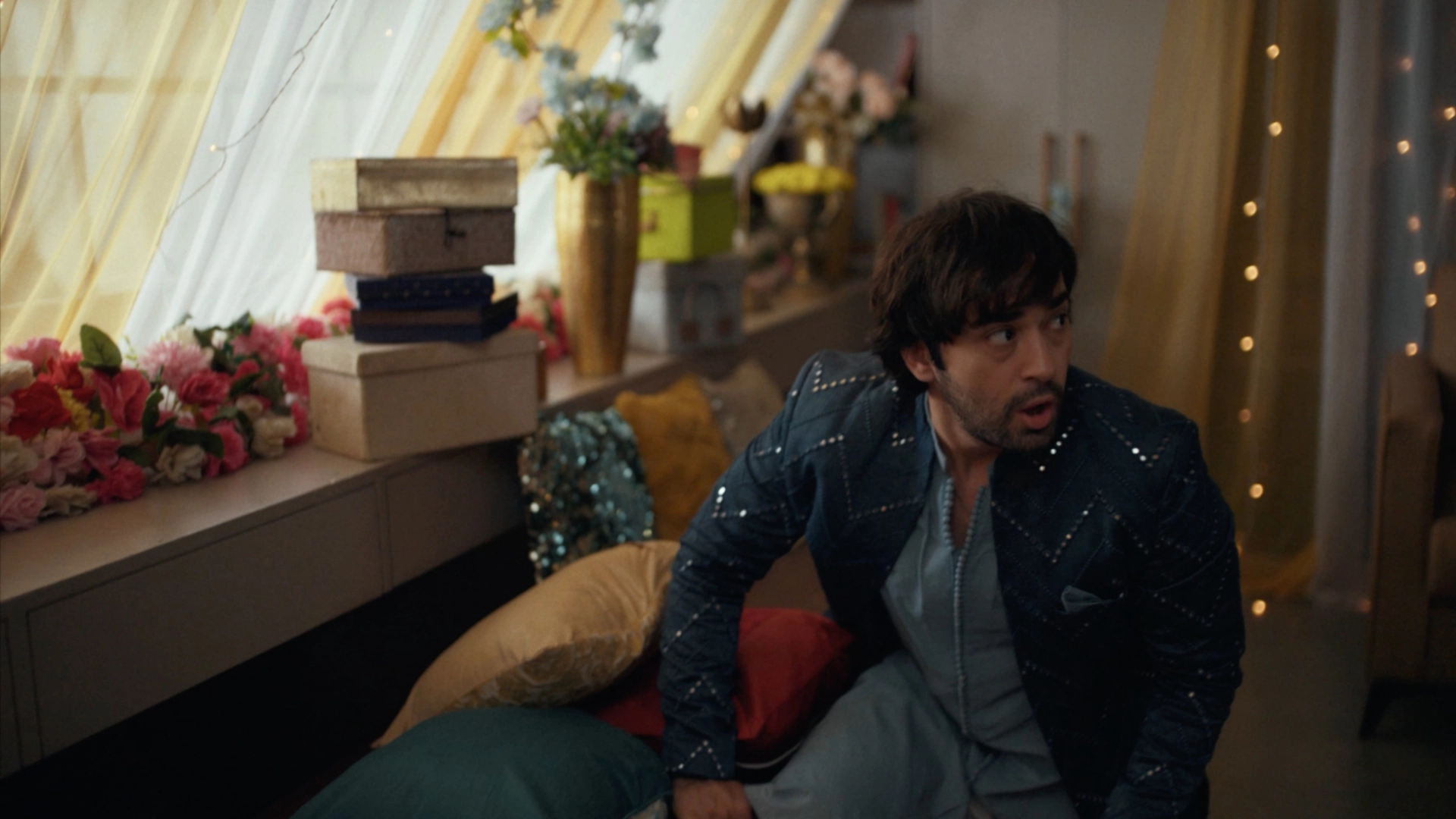
The North Indian Wedding production design for Vivo is a useful example of this approach: rooms, corridors and exterior moments were treated as parts of the same wedding environment rather than separate setups.
Plan for camera movement before finalising the look
A beautiful set can still fail on the shoot floor if it only works from one angle. Production design for film has to anticipate lensing, actor movement, camera tracks, lighting positions, eyelines and the amount of depth the cinematographer needs behind a subject.
That means discussing practical questions early: Is the camera moving through the entrance? Will a ceremony be covered from three directions? Does the product need a clean background? Is there enough distance for a wider lens? Can a wall be removed or cheated? Where will practical lights appear in frame? Can the same space deliver both a wide master and intimate close-ups without revealing weak areas?
These decisions often change the scale of décor, the height of hanging elements, the density of the background and even where furniture should sit. The goal is not to make the space look “full”; it is to make every required frame feel intentional.


Festive films often work better through transformation than excess
Festival advertising has a similar challenge. The instinct is often to make the location immediately festive, but that is not always the strongest storytelling choice. If the script is about homecoming, anticipation, family connection or a shift in mood, production design can support that change gradually.
In the IFB Diwali advertising film, the environment begins as a believable everyday home and becomes warmer through practical festive lighting, decorative elements and atmosphere. The emotional transition is carried by the space itself rather than by adding spectacle to every frame from the beginning.


For Diwali, Eid, Holi, regional New Year campaigns or other festival-led films, it helps to define the emotional arc first. A family film may need familiarity and warmth. A fashion-led campaign may need stronger visual geometry. A product launch may require a cleaner brand-controlled palette. The festival is the cultural context; the design still has to belong to the story and brand.
What a production designer needs before the recce
A more complete brief usually produces better design decisions and a more accurate budget. Before the first recce, producers, agencies or directors should ideally share:
- Script or treatment: even an early version helps identify the number and function of spaces.
- Cultural context: region, wedding tradition, festival, community references and any non-negotiable rituals.
- Brand world: campaign palette, product visibility requirements, previous films and visual restrictions.
- Reference direction: not only images that are liked, but what specifically is liked about them—scale, light, colour, texture or composition.
- Location status: confirmed location, shortlist, studio requirement or whether a full build is being considered.
- Shot requirements: important wides, movement, dance, crowd size, product close-ups and special transitions.
- Schedule: build days, installation window, shoot duration and strike restrictions.
- Budget range: a realistic working range allows the design to prioritise what will actually appear on camera.
Location adaptation or full set build?
Not every wedding or festive film needs a full set. Existing locations can be extremely effective when their architecture already gives the film the right scale and character. In those cases, production design may focus on controlling colour, hiding contemporary distractions, adding layers, building temporary architectural pieces, dressing circulation areas and creating a consistent visual language across the property.
A full build becomes more useful when the script needs precise camera access, repeatable geometry, removable walls, multiple connected spaces, extensive rigging or a visual world that cannot realistically be found in a location.
The decision should come from the shot requirements and production realities, not from the assumption that a built set is always more premium. A thoughtfully adapted real location can feel richer than an overbuilt environment if the camera and narrative are driving the design.
What usually affects the production design budget
The largest cost differences are usually created by scope rather than by the number of decorative objects. The size of the build, duration of installation, carpentry and scenic work, floral requirements, custom props, fabric quantities, lighting integration, transport, labour, multiple locations and overnight changes can all materially alter the budget.
Wedding and festive films also tend to involve density: larger casts, more background movement, ceremonial details and multiple layers within the frame. It is useful to identify the hero areas early so money is concentrated where the camera will actually see it.
A practical checklist before the shoot
- Confirm the cultural and ritual references with the creative team.
- Lock the hero colour and material palette before procurement begins.
- Map every major scene to a specific physical area.
- Check camera access and lighting positions during recce.
- Identify which elements need to survive multiple setups or shoot days.
- Plan practical lights as part of production design, not as last-minute decoration.
- Separate hero props from background dressing so attention goes to the right details.
- Review the set through monitor frames before final dressing is considered complete.
Explore Set Craft’s wedding and festive film work
For project-specific breakdowns, explore the South Indian Wedding Film, Bengali Wedding Film, Manipuri Wedding Film, Two States Wedding Film and North Indian Wedding Film. For festival-led advertising, see the IFB Diwali production design case study.
You can also browse the wider Set Craft Projects archive for advertising films, branded environments, studios and narrative work, or explore more practical articles in Production Design Insights.
Planning a wedding or festive film?
Bring the production designer in while the treatment, locations and shot requirements are still flexible. Early collaboration makes it easier to align cultural research, spatial design, camera movement, fabrication and budget before the build begins.
If you are developing a wedding film, festive advertising campaign or culturally specific branded film, contact Set Craft to discuss the production design requirement.
Frequently asked questions
How early should production design begin for a wedding or festive film?
Ideally during treatment development or before the final location is locked. Early involvement allows the location, art direction, shot planning and budget to be developed together rather than corrected later.
Can an existing venue be converted for a wedding film?
Yes. Many projects benefit from location adaptation rather than a complete build. The production design can reshape the visual language through temporary architectural elements, drapery, props, furniture, florals, practical lighting and controlled set dressing.
How do you avoid a wedding set looking generic?
Start with cultural and narrative research, then choose a limited number of meaningful visual anchors. Authentic ritual details, region-specific materials and coherent spatial design usually create a stronger result than simply increasing decoration.
What is different about production design for a festive advertisement?
The environment must serve both the festival and the brand story. Colour, lighting, props and décor need to work with product visibility, performance, camera movement and the emotional progression of the film rather than functioning as standalone decoration.
Continue exploring Set Craft