Soundproof Studio Design & Acoustic Planning by Set Craft
Client: Choice FinX
Location: Mumbai, India
Category: Creator Studio Design
Services: •Soundproof Studio Design •Production Design • Studio Design • Acoustic Planning • Interior Styling • Project Execution
Project Status: Completed
A Creator Studio Designed To Perform Beyond The Camera
Modern businesses no longer communicate only through presentations and boardrooms. They create podcasts, record educational content, host interviews, film founder conversations, produce brand campaigns, and publish videos every week.
As content production becomes an essential part of business communication, recording environments can no longer be improvised. They need to perform consistently, sound professional, and visually represent the brand in every frame.
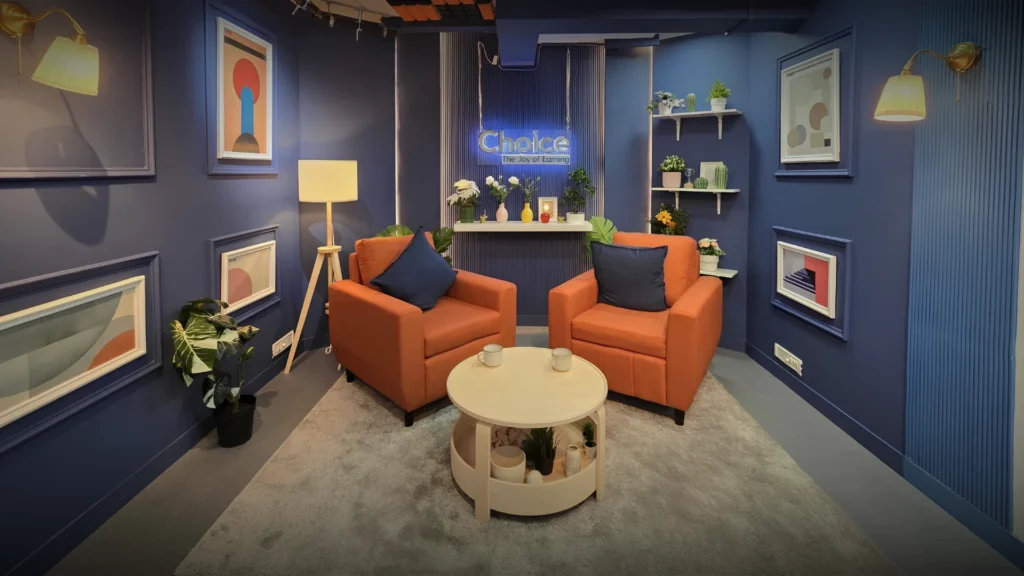
For this project, Set Craft was commissioned to design and build a fully soundproof creator studio inside an active corporate office.
The objective extended far beyond constructing another recording room.
The studio needed to become a dedicated production environment capable of supporting long-form podcasts, interviews, educational videos, branded storytelling, and digital content while remaining seamlessly integrated within a workplace occupied by more than one hundred employees.
The result is a carefully engineered creator studio where acoustic performance, production design, lighting, material selection, and cinematic interiors work together to create a professional content environment that performs both technically and visually.
Project Overview
Every successful studio begins with understanding how content will actually be created.
Instead of designing a conventional office interior, we approached this project as a production environment.
Every wall, surface, material, lighting fixture, furniture layout, and decorative element was evaluated from two different perspectives:
- How will it perform acoustically?
- How will it appear through a camera lens?
That approach shaped every design decision throughout the project.
The completed studio now supports:
- Podcast Recording
- Founder Conversations
- Executive Interviews
- Educational Content
- YouTube Production
- Branded Video Content
- Marketing Campaigns
- Social Media Production
- Corporate Communication
- Multi-camera Recording Sessions
Unlike traditional interiors where aesthetics alone define success, this environment had to satisfy three equally important requirements.
It had to provide:
- acoustic isolation,
- production efficiency,
- and cinematic visual quality.
Only by balancing all three could the studio become a space creators would genuinely enjoy using every day.
The Challenge
Most offices are never truly quiet.
Phones ring continuously.
Conversations travel through open workspaces.
Meeting rooms open and close throughout the day.
Air-conditioning systems generate constant background noise.
Footsteps travel across floors.
Office equipment produces a layer of ambient sound that people often stop noticing—but microphones never do.
Designing a professional recording environment inside such an active workplace presents a unique challenge.
The studio needed to prevent external office noise from entering the recording space while also ensuring that conversations taking place inside the studio would not disturb the surrounding workplace.
This required much more than decorative acoustic panels.
It demanded a complete understanding of sound isolation, spatial planning, construction methodology, production workflow, and recording requirements.
At the same time, the room could not resemble a technical sound booth.
It needed to feel warm, welcoming, cinematic, and visually engaging on camera.
Every recording should look professionally produced without requiring major changes to lighting or set dressing.
The challenge therefore became:
How do you create a production-ready creator studio inside an operational office without compromising either acoustic performance or visual storytelling?
That question became the foundation of the entire design process.
Our Design Philosophy
At Set Craft, we believe creator studios should never feel like recording laboratories.
Content is built around people.
People perform better inside environments that feel comfortable, inspiring, and emotionally engaging.
Instead of hiding technical requirements behind industrial finishes, we integrate them into thoughtfully designed spaces where production design and acoustic engineering exist together.
This philosophy guided every decision throughout the project.
Rather than treating lighting, furniture, materials, and acoustics as separate disciplines, we designed them as interconnected systems.
Every visual element contributes to both the recording experience and the final image captured by the camera.
The studio was therefore designed around five core principles:
Acoustic Performance
The room needed controlled sound behaviour suitable for professional voice recording while reducing interference from the surrounding office.
Camera-Ready Composition
Every wall functions as a usable background.
Multiple recording angles allow creators to produce different content formats without rebuilding the set.
Cinematic Interior Design
Warm lighting, balanced colours, layered textures, and carefully selected materials create an environment that feels premium without becoming visually distracting.
Production Efficiency
Furniture layouts allow quick transitions between podcasts, interviews, presentations, educational content, and branded productions.
Long Recording Comfort
The studio remains comfortable during extended recording sessions through balanced lighting, thoughtful proportions, comfortable seating, and a welcoming atmosphere.
Scope of Work
Set Craft managed the complete planning, design, and execution of the project.
Our scope included:
- Creator Studio Planning
- Production Design
- Interior Design
- Acoustic Planning
- Soundproofing Strategy
- Spatial Layout Design
- Camera Angle Planning
- Furniture Selection
- Material Research
- Colour Palette Development
- Lighting Design
- Decorative Styling
- Background Composition
- Custom Fabrication
- Project Execution
- Installation Supervision
- Final Interior Styling
- Production Readiness Testing
Every stage was carefully coordinated to ensure that technical performance and visual storytelling developed together rather than independently.
Studio Design Process
Every creator studio we design follows a structured process developed specifically for production environments.
1. Discovery & Content Planning
Before creating drawings or selecting materials, we first studied how the client intended to use the space.
Questions included:
- What type of content will be produced?
- How many people will appear on camera?
- Which camera angles will be used most frequently?
- How long will recording sessions typically last?
- What level of sound isolation is required?
- How should the environment represent the client’s brand?
Understanding these operational requirements ensured that design decisions supported actual production workflows rather than simply creating attractive interiors.
2. Acoustic Planning
With the recording requirements established, acoustic planning became the next priority.
The objective was to reduce external office noise while creating clear voice recordings inside the room.
Construction systems, wall assemblies, ceiling treatments, flooring considerations, and service routes were all planned together to minimise unwanted sound transmission.
Rather than relying solely on decorative acoustic panels, the studio was engineered as an integrated acoustic enclosure that works as a complete system.
3. Production Design & Interior Styling
Once the technical framework was defined, attention shifted toward the visual identity of the studio.
The room needed to perform beautifully across multiple camera angles without requiring constant rearrangement.
Furniture placement, lighting layers, artwork, shelving, textures, plants, colour balance, and decorative accessories were composed as production elements rather than traditional interior decoration.
Each background was intentionally designed to feel balanced, premium, and visually engaging while supporting different content formats.
4. Construction & Execution
Following design approval, our team executed fabrication, installation, finishing, lighting integration, and final styling.
Throughout execution, construction decisions were continuously evaluated against both acoustic performance and visual composition to ensure that the completed studio delivered exactly as intended.
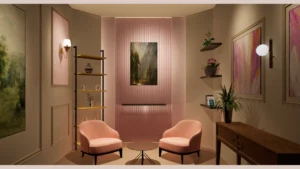
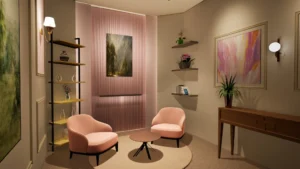
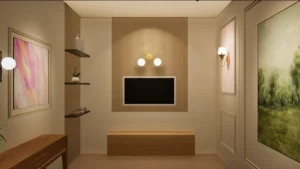
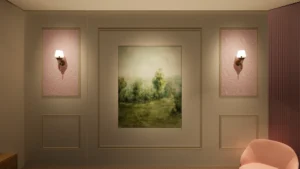
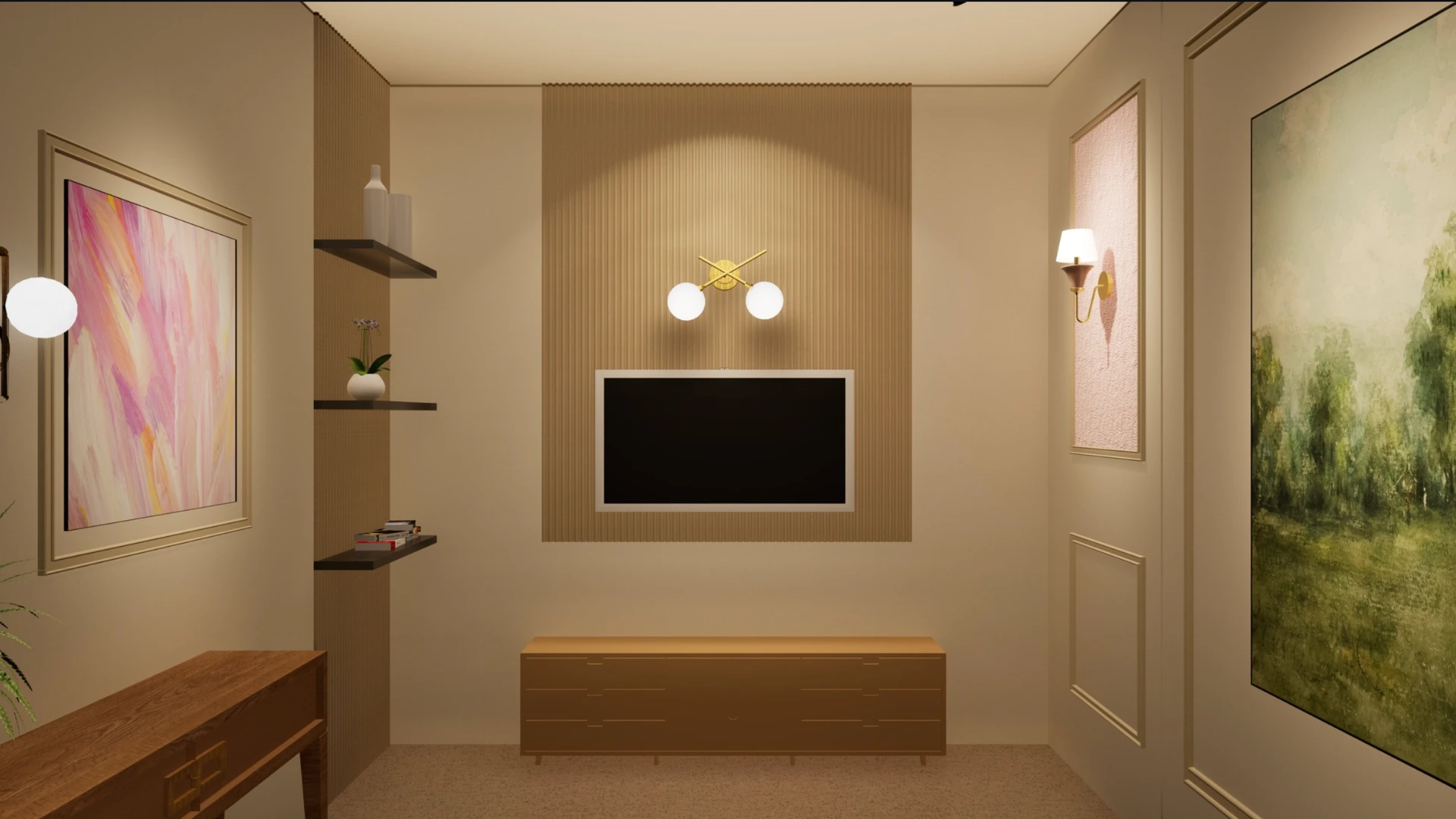
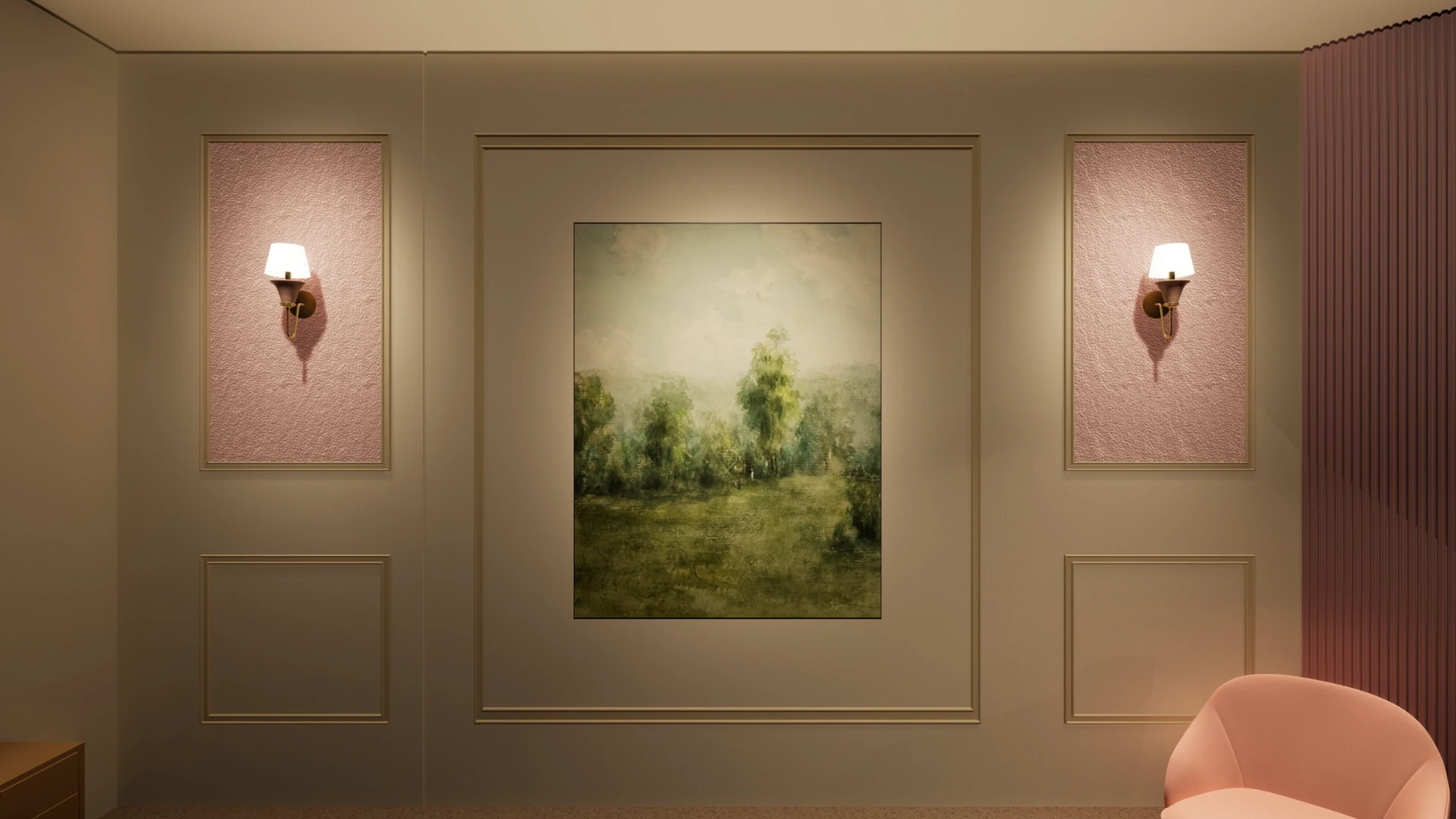
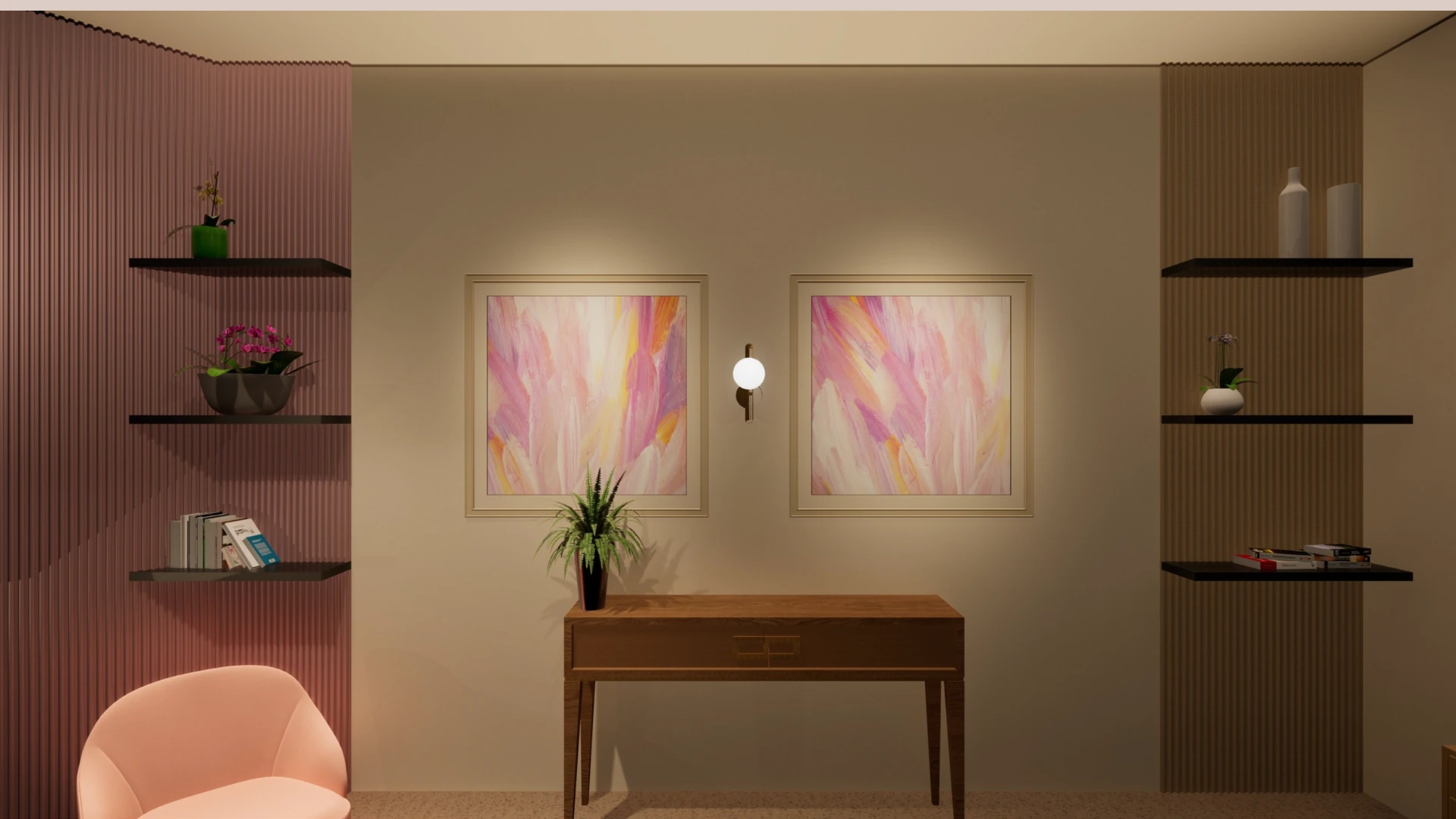
Designing The Environment Before Construction
Every successful production environment begins long before construction starts.
Unlike conventional interior projects, creator studios are experienced primarily through a camera rather than through everyday occupancy. This changes the entire design process.
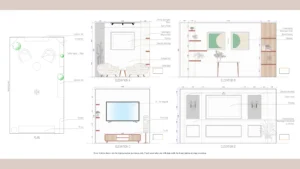
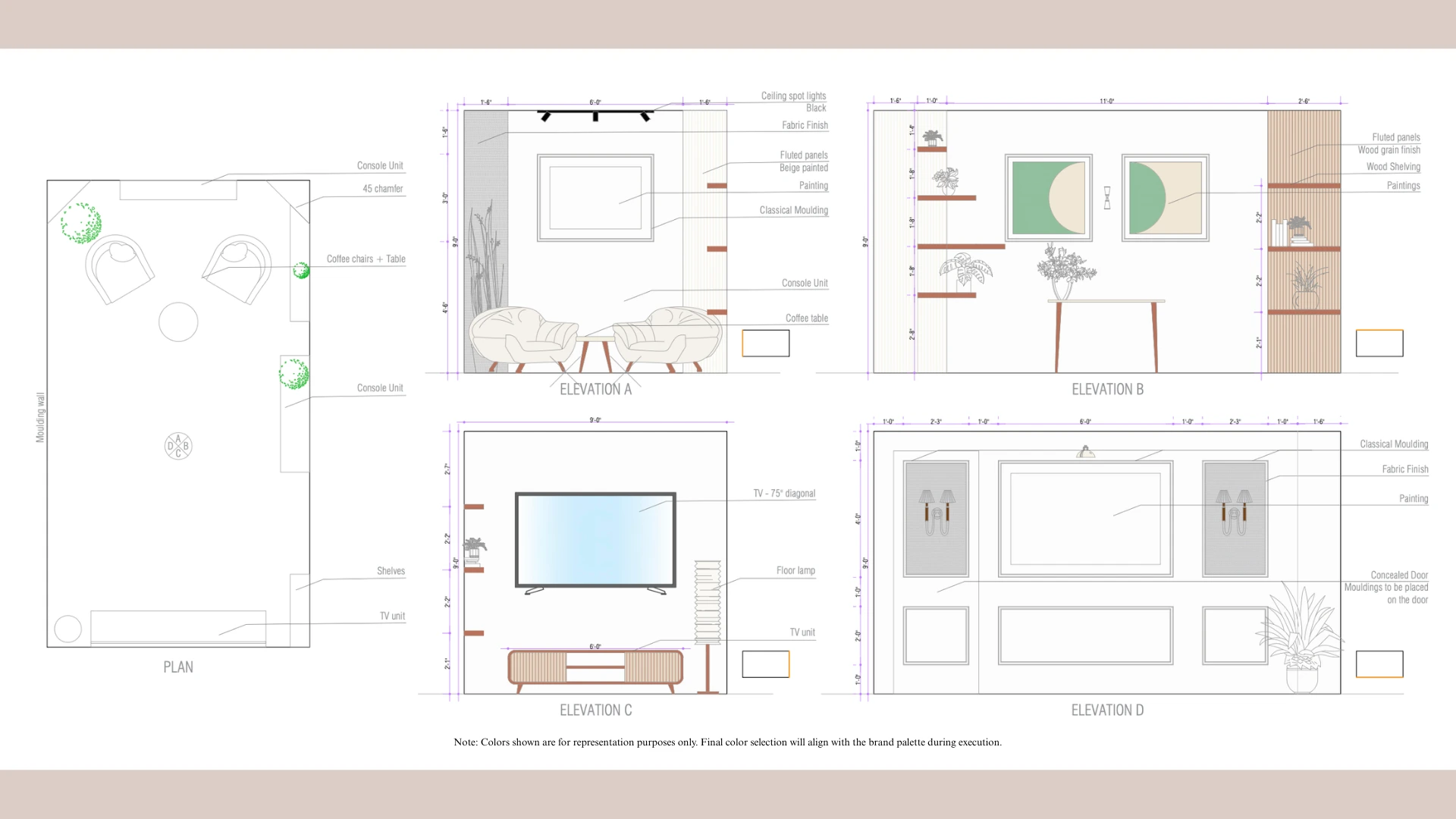
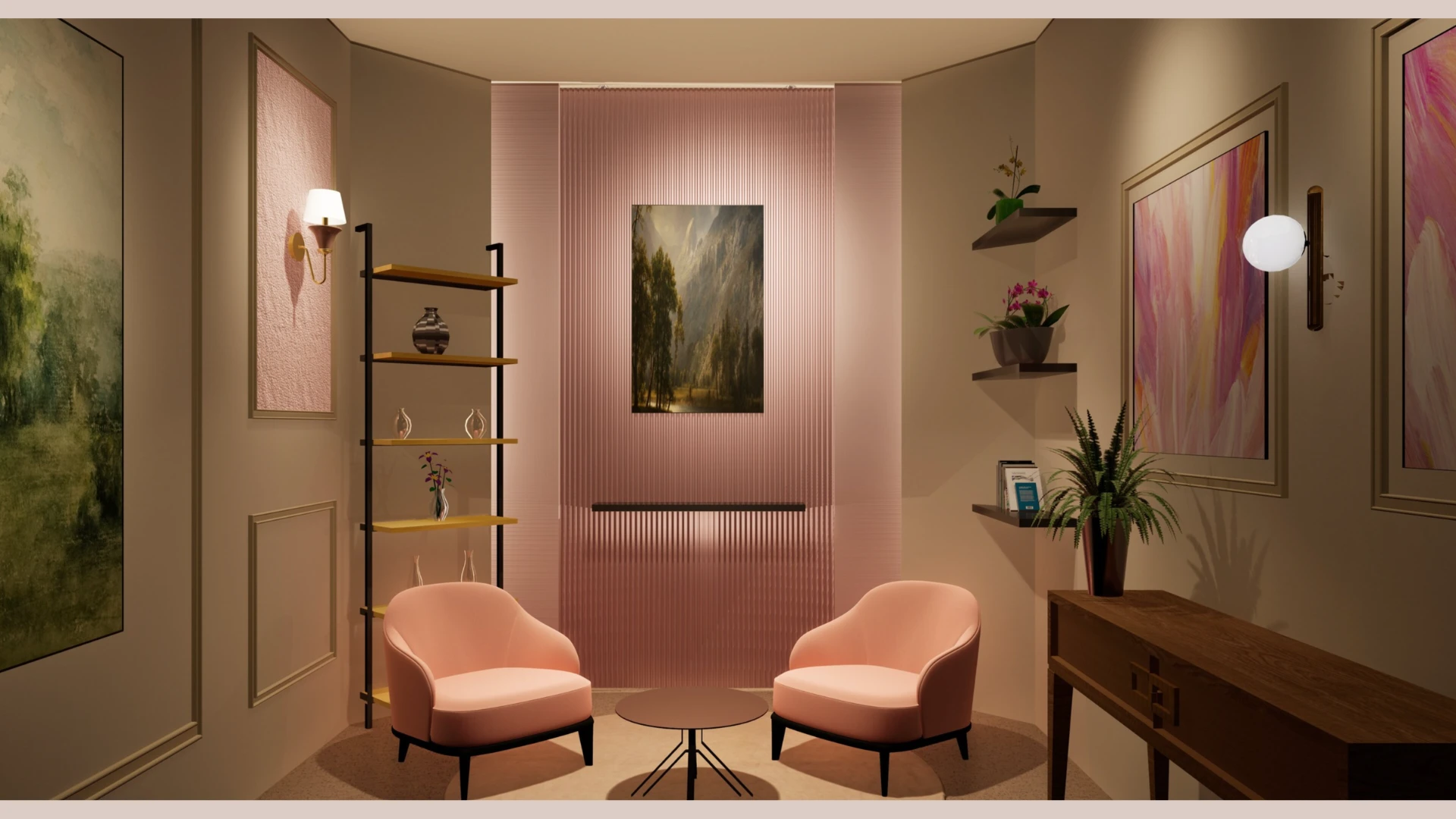
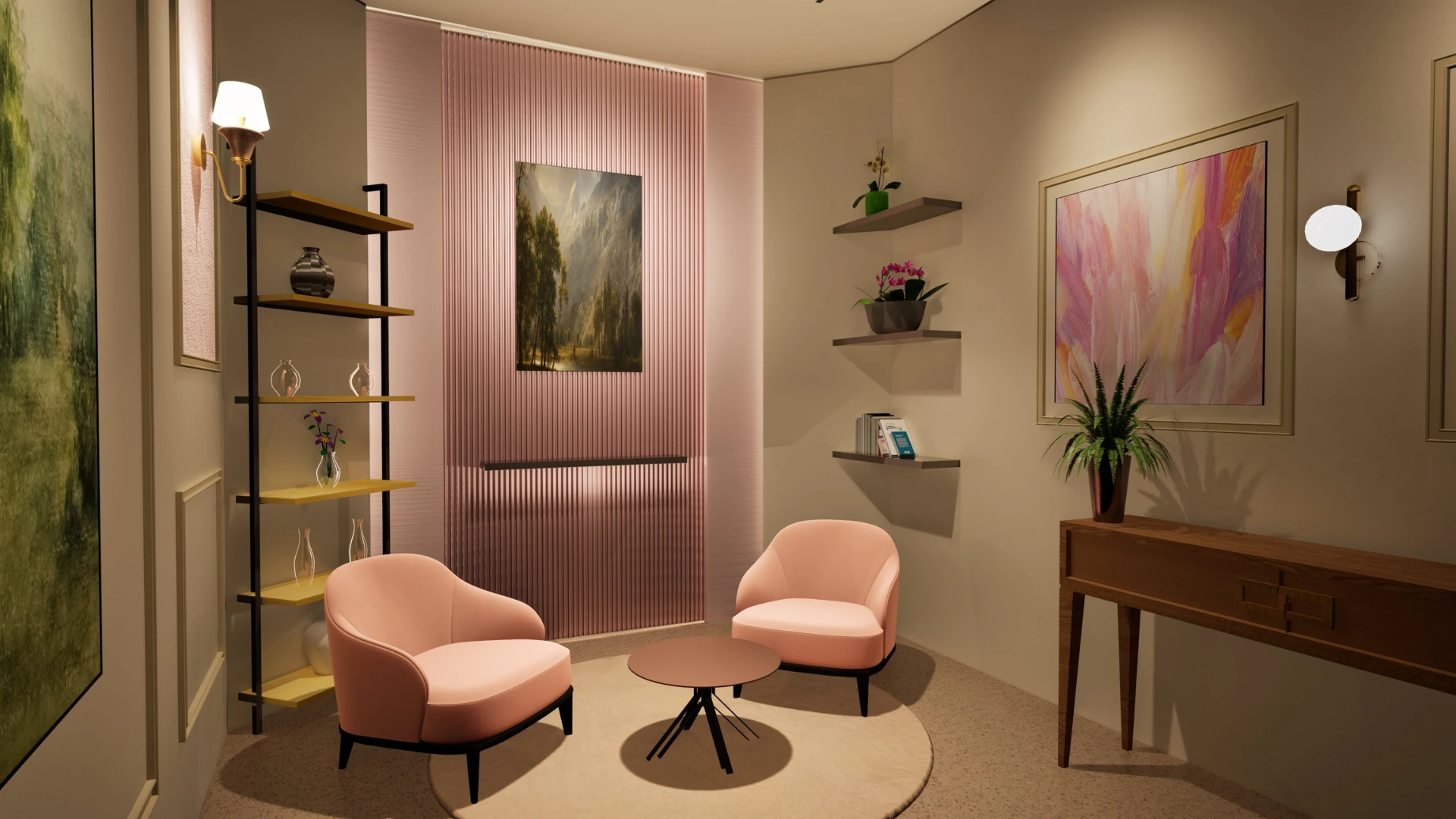
Before a single wall was fabricated, every major design decision was explored through visual studies, production layouts, material research, and camera simulations. The objective was not simply to create a beautiful room, but to understand how every surface would perform once recording began.
Furniture arrangements, lighting positions, wall compositions, colour palettes, shelving, artwork, decorative elements, and camera backgrounds were all developed simultaneously to ensure every recording angle felt intentional.
Rather than designing a room and later figuring out where cameras should be placed, we designed the entire environment around the camera from the very beginning.
Each concept was evaluated against several questions:
- Does the background create visual depth?
- Can multiple recording formats be supported?
- Will the composition remain balanced with one or two speakers?
- How does practical lighting influence skin tones?
- Are decorative elements adding character without creating distraction?
- Does the environment reinforce the client’s brand identity?
Only after these questions were answered did we proceed toward detailed execution.
The result was a studio where every frame already felt composed before the first recording ever took place.
From Moodboards To Reality
A production environment is never built from instinct alone.
It is developed through hundreds of small visual decisions that eventually create one cohesive experience.
Our concept development process focused on creating a studio that felt intimate, cinematic, modern, and timeless.
Every reference image, lighting study, furniture selection, colour sample, and decorative element was chosen with a clear purpose.
Rather than following temporary interior trends, we concentrated on creating an environment capable of remaining visually relevant for years of continuous content production.
Throughout the concept stage we explored:
- Spatial zoning
- Furniture relationships
- Camera framing
- Lighting hierarchy
- Decorative styling
- Material combinations
- Wall compositions
- Shelf styling
- Practical lighting placement
- Colour balance
Each revision brought the design closer to an environment that would perform equally well for podcasts, interviews, founder conversations, educational videos, and branded productions.
This preparation dramatically reduced uncertainty during execution while ensuring the finished studio reflected the original creative vision.
Designing Beyond A Conventional Recording Room
Many recording studios are designed with only one objective—sound isolation.
While technically effective, these environments often feel clinical, overly engineered, and visually repetitive.
Modern creators expect much more.
The recording space itself becomes part of the content.
It represents the personality of the speaker, the identity of the business, and the quality of the production.
At Set Craft, we believe production environments should communicate emotion before a single word is spoken.
That philosophy shaped every aspect of this project.
Instead of creating a technical recording booth, we developed an interior capable of delivering:
- Professional acoustic performance
- Warm visual character
- Flexible production layouts
- Comfortable long-duration recording
- Multiple camera-ready backgrounds
Every recording angle needed to feel complete without requiring additional styling before each shoot.
The environment itself became an extension of the storytelling process.
The Reality Of Recording Inside A Busy Office
Recording high-quality audio inside an operational office presents challenges that rarely exist in dedicated studios.
Even when an office appears quiet to the human ear, microphones capture an entirely different reality.
Sound continuously travels through:
- Structural walls
- Suspended ceilings
- Glass partitions
- HVAC systems
- Electrical penetrations
- Floor slabs
- Service ducts
- Door gaps
- Window frames
- Mechanical vibrations
These unwanted sounds introduce distractions that reduce recording quality and become increasingly noticeable during podcast production, interviews, and long-form conversations.
Even premium microphones cannot compensate for poor acoustic environments.
Instead, they faithfully reproduce every reflection, echo, vibration, and background disturbance present within the space.
For this reason, achieving professional sound quality required a holistic acoustic strategy rather than isolated treatments.
The goal was to create a recording environment where voices remained clear, intimate, and naturally balanced regardless of recording duration.
Understanding Soundproofing And Acoustic Treatment
These two concepts are frequently confused, yet they solve entirely different problems.
Understanding the distinction was fundamental to the success of this project.
Soundproofing
Soundproofing prevents unwanted external noise from entering the recording space while also reducing sound transmission from the studio into surrounding work areas.
Its purpose is isolation.
Without proper soundproofing, office conversations, meeting rooms, footsteps, HVAC equipment, and daily workplace activity inevitably become part of the recording.
Effective soundproofing depends upon the construction system itself rather than decorative finishes.
Every junction, penetration, and structural connection must work together to minimise sound transmission.
Acoustic Treatment
Acoustic treatment improves how sound behaves after it enters the room.
Rather than blocking noise, it controls reflections, reverberation, echo, and speech clarity.
This creates recordings that sound clean, intimate, and professional.
Without acoustic treatment, voices bounce repeatedly between hard surfaces, reducing clarity and making even expensive recording equipment ineffective.
Together, soundproofing and acoustic treatment formed the foundation of this creator studio.
One isolated the room.
The other refined the listening experience.
Neither could succeed without the other.
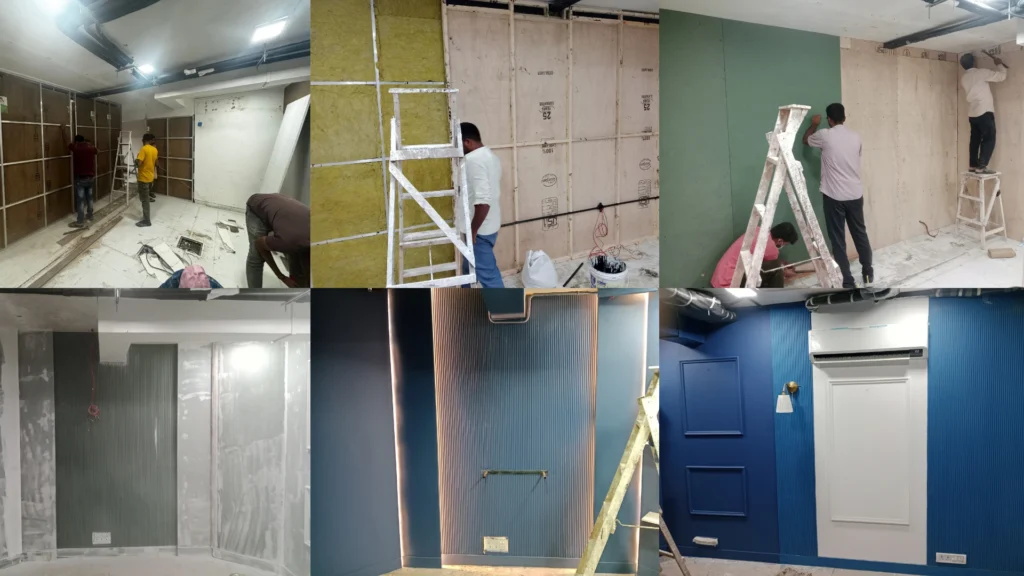
Engineering Silence
Creating silence is not simply about adding insulation.
It is about designing an entire construction system where every component contributes to acoustic performance.
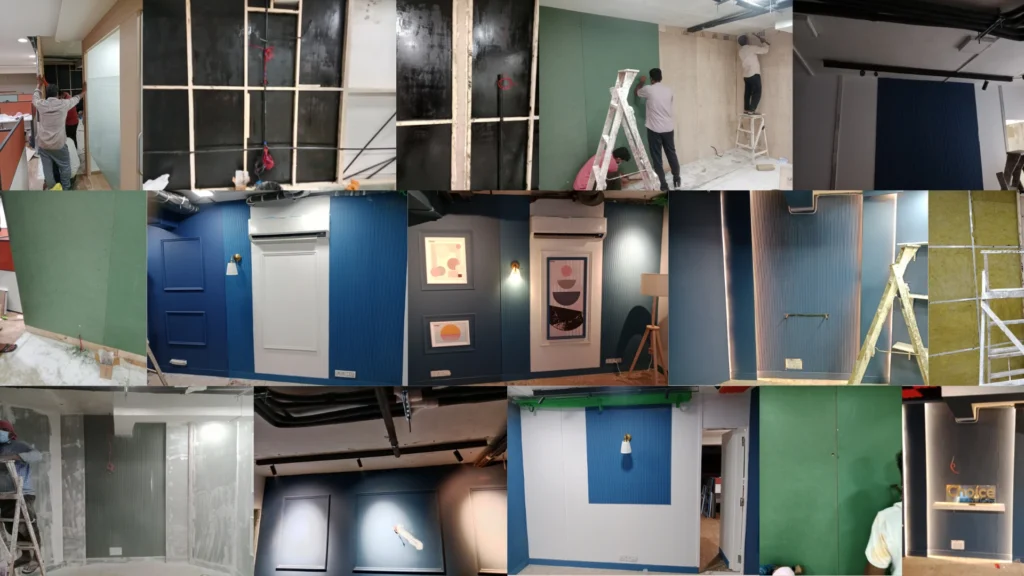
Throughout the execution process, attention was given to every structural layer.
Wall assemblies were planned to minimise sound transfer while allowing the studio to remain visually refined once completed.
Construction focused on creating a controlled acoustic shell that became almost invisible after the interior was finished.
Special attention was given to:
- wall assemblies
- insulation layers
- structural framing
- sealed construction joints
- ceiling transitions
- electrical routing
- service penetrations
- door detailing
- HVAC integration
- vibration control
Every small opening within a room has the potential to compromise acoustic performance.
For this reason, precision during execution became just as important as precision during design.
The finished studio demonstrates that technical performance does not require industrial aesthetics.
Instead, engineering remains hidden beneath an environment that feels warm, comfortable, and visually inviting.
Behind The Construction Process
Projects of this nature rarely progress in a perfectly linear sequence.
As execution advances, design decisions continue to evolve in response to real site conditions.
Throughout construction, multiple aspects of the project were refined repeatedly.
Lighting positions were adjusted to improve camera compositions.
Furniture layouts were modified to create greater flexibility.
Wall treatments were refined to improve both acoustics and visual balance.
Decorative elements were repositioned to strengthen background depth across different camera angles.
Every refinement moved the project closer to its final objective—a production environment where technical precision and cinematic storytelling exist together naturally.
Rather than treating construction as the final stage of design, we viewed it as a continuous process of observation, testing, refinement, and improvement.
This collaborative approach allowed the completed studio to perform exactly as envisioned during the concept phase.
Every Layer Had A Purpose
Unlike decorative interiors where finishes often exist purely for aesthetics, every layer within this studio contributes to overall performance.
Materials were selected not only for appearance but also for their role in shaping acoustics, lighting behaviour, maintenance, and long-term durability.
Every wall, ceiling detail, lighting fixture, furniture element, and decorative object supports the larger production ecosystem.
Nothing exists merely as decoration.
Everything contributes to the quality of the final recording.
That philosophy defines how Set Craft approaches production design.
We believe the most successful environments are those where technical excellence becomes invisible, allowing creators to focus entirely on communication, storytelling, and performance.
Designing For The Camera, Not Just The Eye
Most interior spaces are designed to be experienced by someone standing inside the room.
Creator studios are different.
Their primary audience is rarely the person occupying the space—it is the thousands, and sometimes millions, of people who will experience the room through a camera lens.
That single difference changes the entire design process.
Every recording transforms the environment into part of the story. Every wall becomes a backdrop. Every light becomes part of the composition. Every object contributes to how viewers perceive the speaker, the brand, and the message.
For this reason, we approached the studio as a production set rather than a conventional office interior.
Instead of asking how the room would look while walking through it, we continually asked:
- How does this corner appear on a 35mm lens?
- Does this background create enough visual depth?
- Will the composition remain balanced during a two-person conversation?
- Can the same space support interviews, podcasts, educational videos, and promotional content without rebuilding the set?
- Does every recording angle communicate professionalism?
Only after these questions were answered did the visual language of the studio begin to take shape.
The result is an environment where every direction offers a camera-ready composition without requiring additional styling before each shoot.
Creating Multiple Recording Environments Within One Studio
A successful creator studio should never produce repetitive content.
Although the room occupies a compact footprint, it was intentionally designed to create multiple visual identities within the same space.
Each camera position offers a distinctly different atmosphere while maintaining a consistent design language.
The studio can effortlessly transition between:
- Founder interviews
- Podcast conversations
- Educational videos
- Product discussions
- Corporate announcements
- Guest interviews
- Branded storytelling
- Social media content
- Live sessions
- Thought leadership content
By carefully planning sightlines, furniture placement, artwork, shelving, lighting, and negative space, every recording angle feels intentional rather than improvised.
This flexibility allows creators to produce months of content without audiences feeling that every video was filmed in the same room.
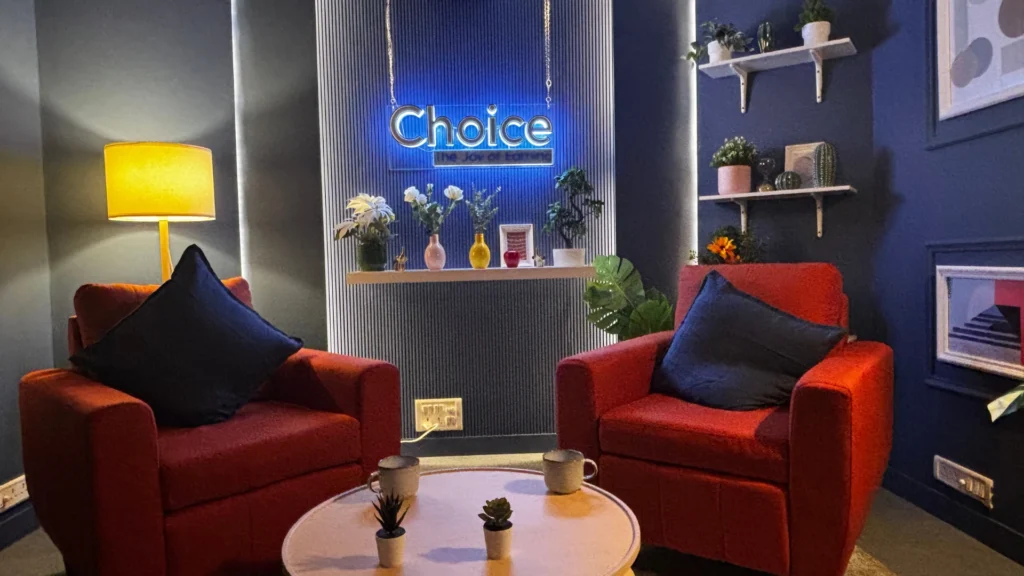
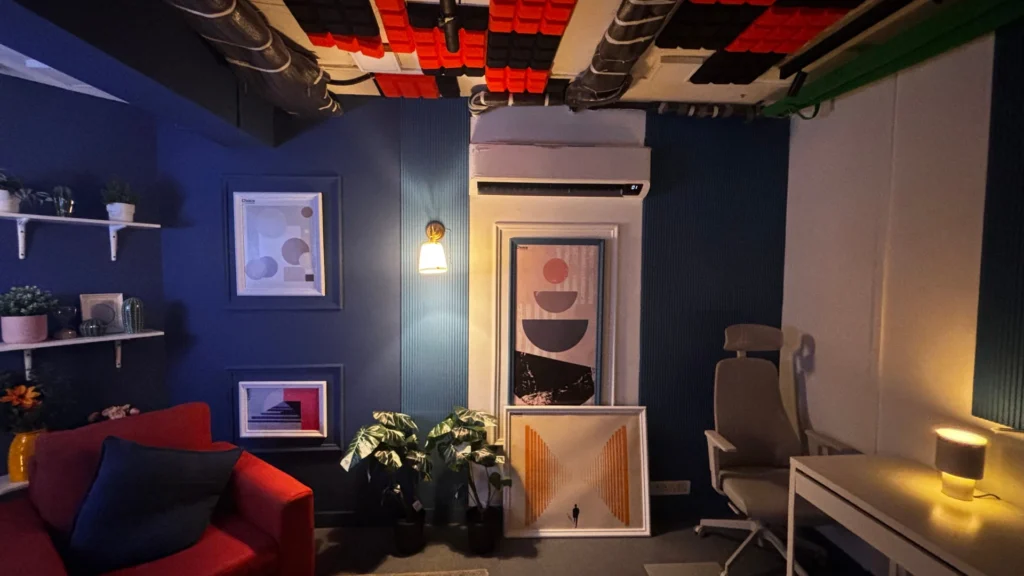
Spatial Composition & Visual Depth
Professional content depends on more than good lighting.
It depends on creating visual layers that guide the viewer’s attention naturally.
Flat backgrounds often make recordings feel inexpensive, while excessive decoration distracts from the speaker.
Finding the right balance requires careful spatial composition.
Throughout this project, we developed every frame around three visual layers.
Foreground
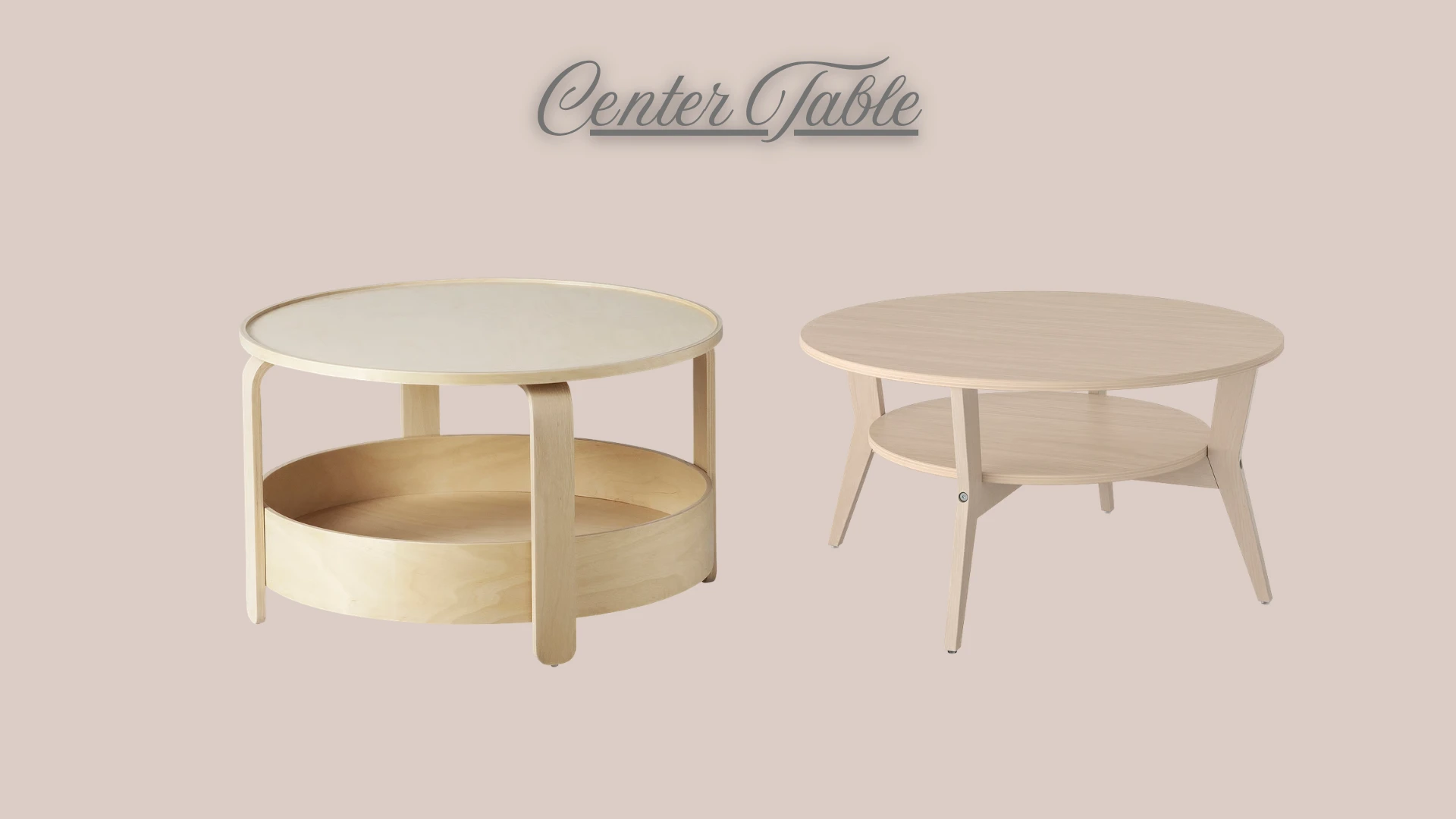
Furniture, coffee tables, decorative accessories, and subtle foreground objects introduce scale and create an immediate sense of depth.
These elements help separate the subject from the environment while making compositions feel immersive rather than flat.
Midground
The conversation zone forms the emotional centre of the studio.
Comfortable seating, carefully proportioned furniture, and practical lighting establish a welcoming environment that encourages relaxed conversations and authentic storytelling.
This area becomes the visual anchor for podcasts, interviews, and discussions.
Background
Rather than functioning as empty walls, the backgrounds actively contribute to the narrative.
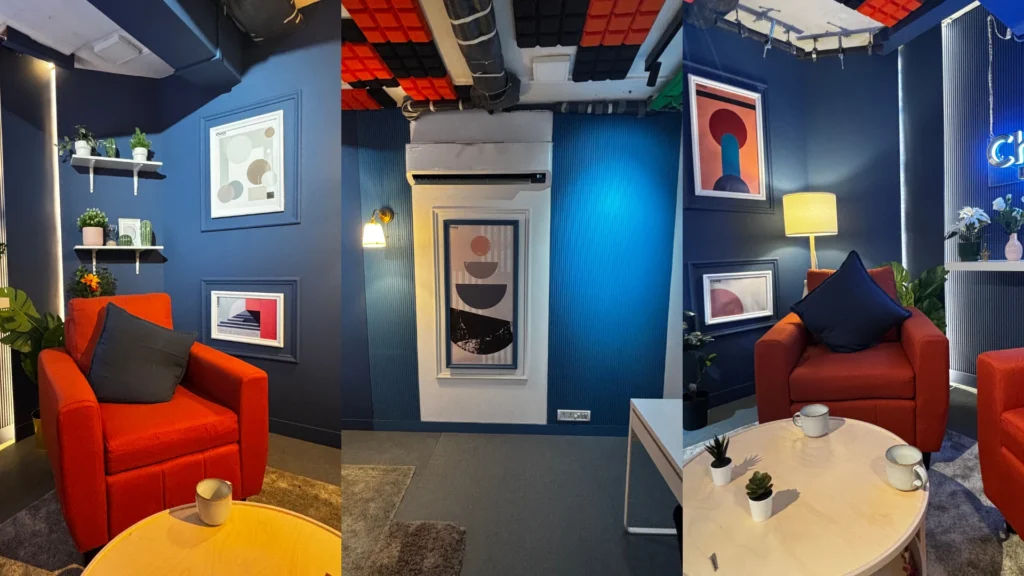
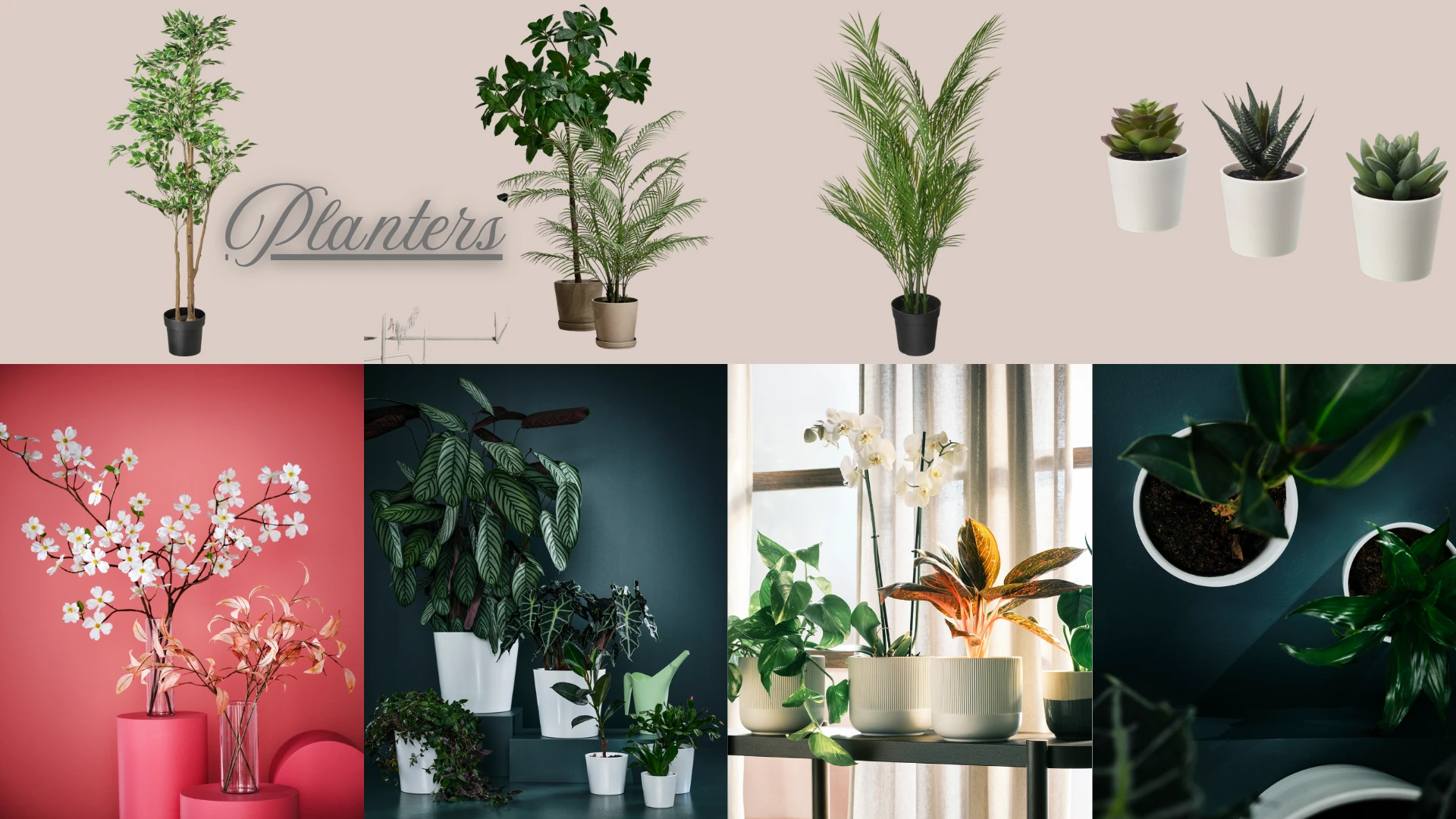
Artwork, shelving, plants, textures, architectural details, and carefully balanced symmetry create visual richness without competing for attention.
The objective is to support the speaker—not overpower them.
Every background remains interesting even after hours of viewing while avoiding unnecessary visual noise.
Material & Texture Strategy
Materials influence far more than appearance.
They determine how light behaves, how sound travels, how colours are perceived, and how viewers emotionally connect with the environment.
For this studio, material selection balanced technical performance with visual warmth.
Every surface was chosen to enhance both recording quality and cinematic presentation.
The palette focused on restrained elegance rather than excessive luxury.
Natural textures and matte finishes reduce unwanted reflections while creating a calm visual atmosphere suitable for long-form conversations.
Key material principles included:
- Matte painted surfaces to minimise glare.
- Warm timber finishes to introduce natural character.
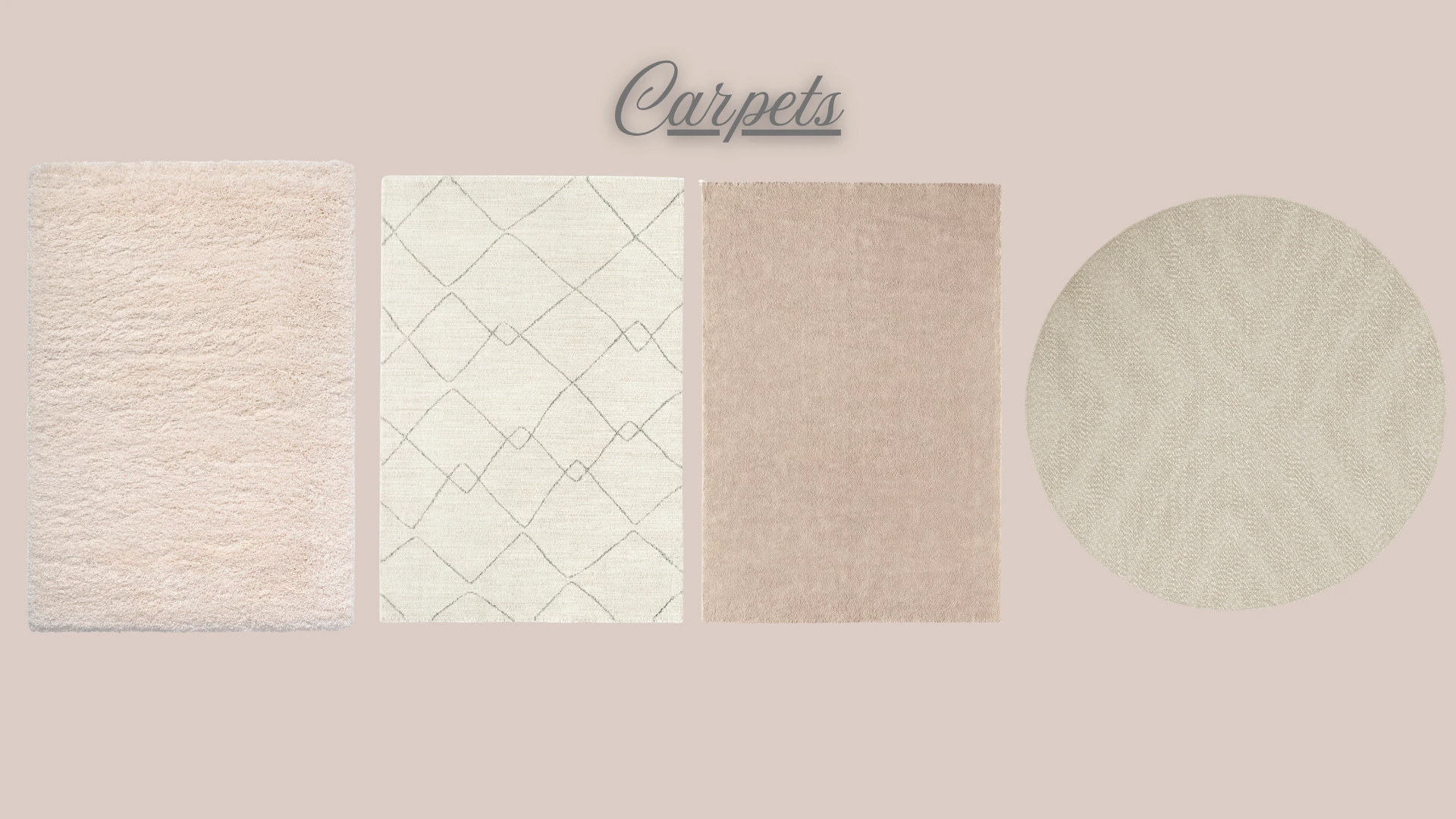
- Upholstered furniture for comfort and acoustic softness.
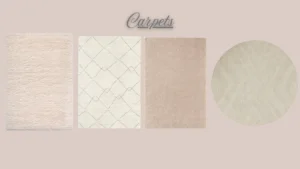
- Layered textiles to reduce harsh reflections.
- Decorative artwork to provide visual storytelling.
- Subtle architectural detailing for depth and sophistication.
Every material contributes to an environment that feels refined, timeless, and comfortable on camera.


Colour Psychology
Colour plays an essential role in visual storytelling.
Instead of relying on bright corporate branding or highly saturated palettes, we developed a colour scheme that encourages focus while remaining emotionally engaging.
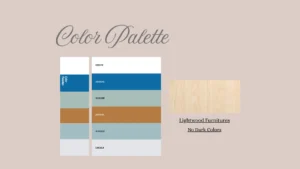
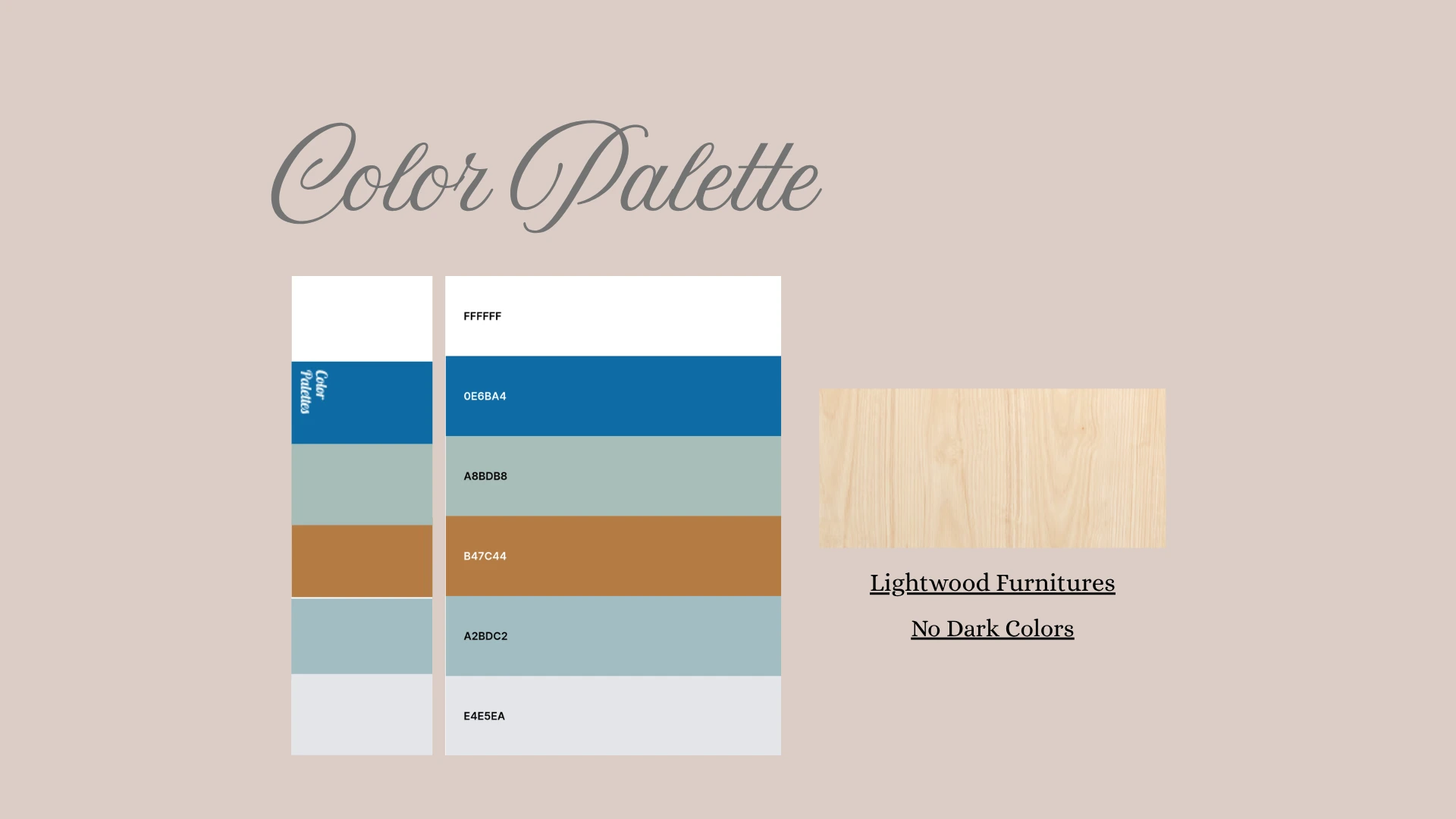
Deep blue became the primary architectural colour.
Blue communicates trust, confidence, intelligence, and calm—qualities particularly suited to podcasts, interviews, and educational content.
To prevent the environment from feeling cold, warm natural materials were introduced throughout the space.
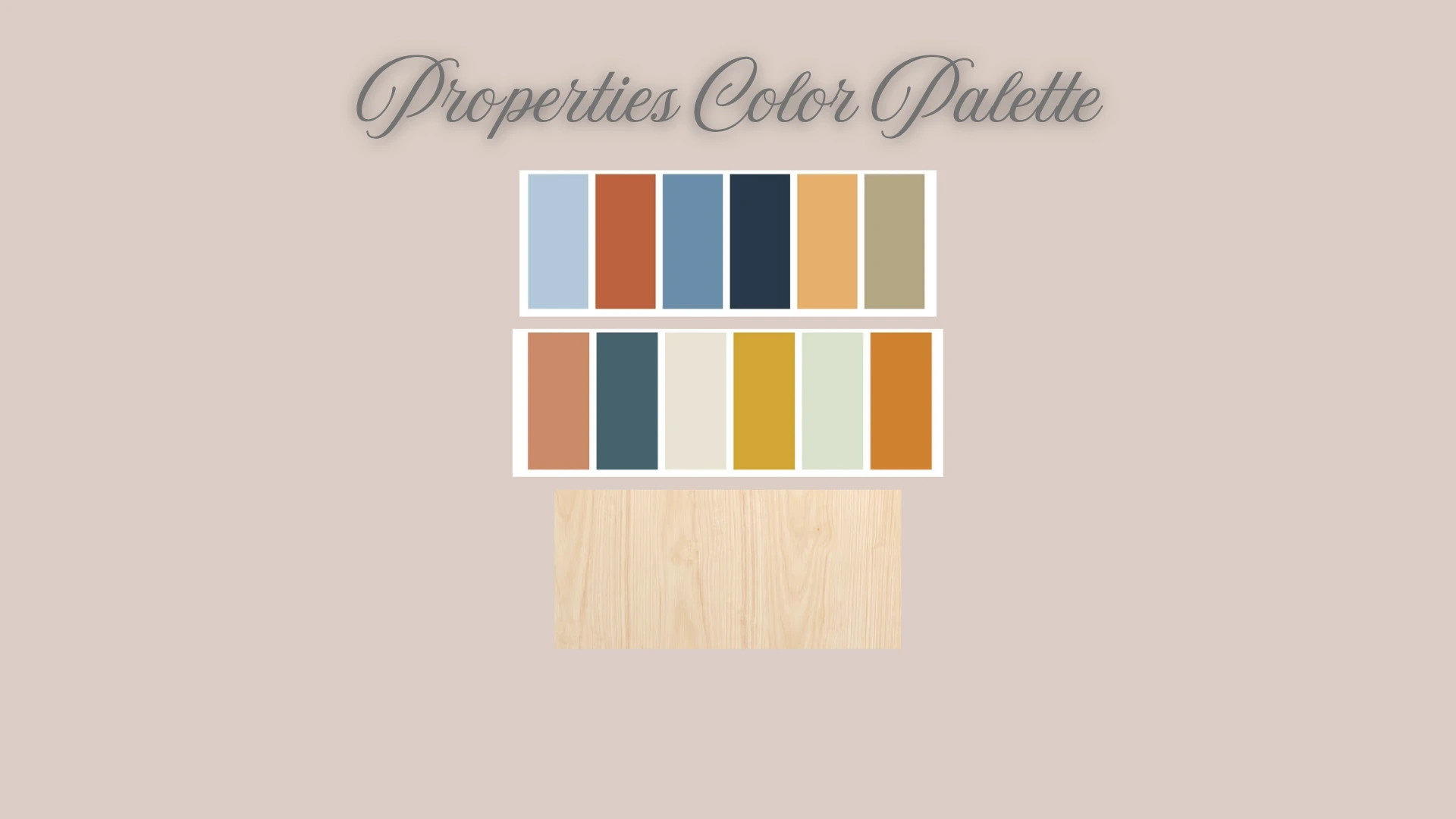
Timber tones, amber lighting, terracotta seating, and greenery soften the composition while creating visual balance.
The resulting palette feels sophisticated without becoming dramatic.
It allows skin tones to appear natural while ensuring the background remains visually memorable.
The relationship between cool architectural surfaces and warm practical lighting creates a cinematic atmosphere that feels premium in every recording.
Lighting As A Storytelling Tool
Lighting was never treated as simple illumination.
It became one of the primary storytelling devices within the studio.
Rather than flooding the room with uniform brightness, the lighting strategy focused on creating atmosphere, separation, and emotional depth.
Three distinct layers work together throughout the environment.
Ambient Lighting
Soft, even illumination establishes comfortable working conditions while reducing eye fatigue during extended recording sessions.
Ambient lighting provides the visual foundation upon which all other lighting layers operate.
Practical Lighting
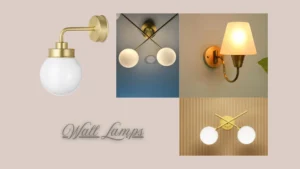
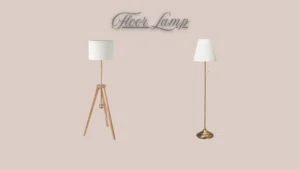
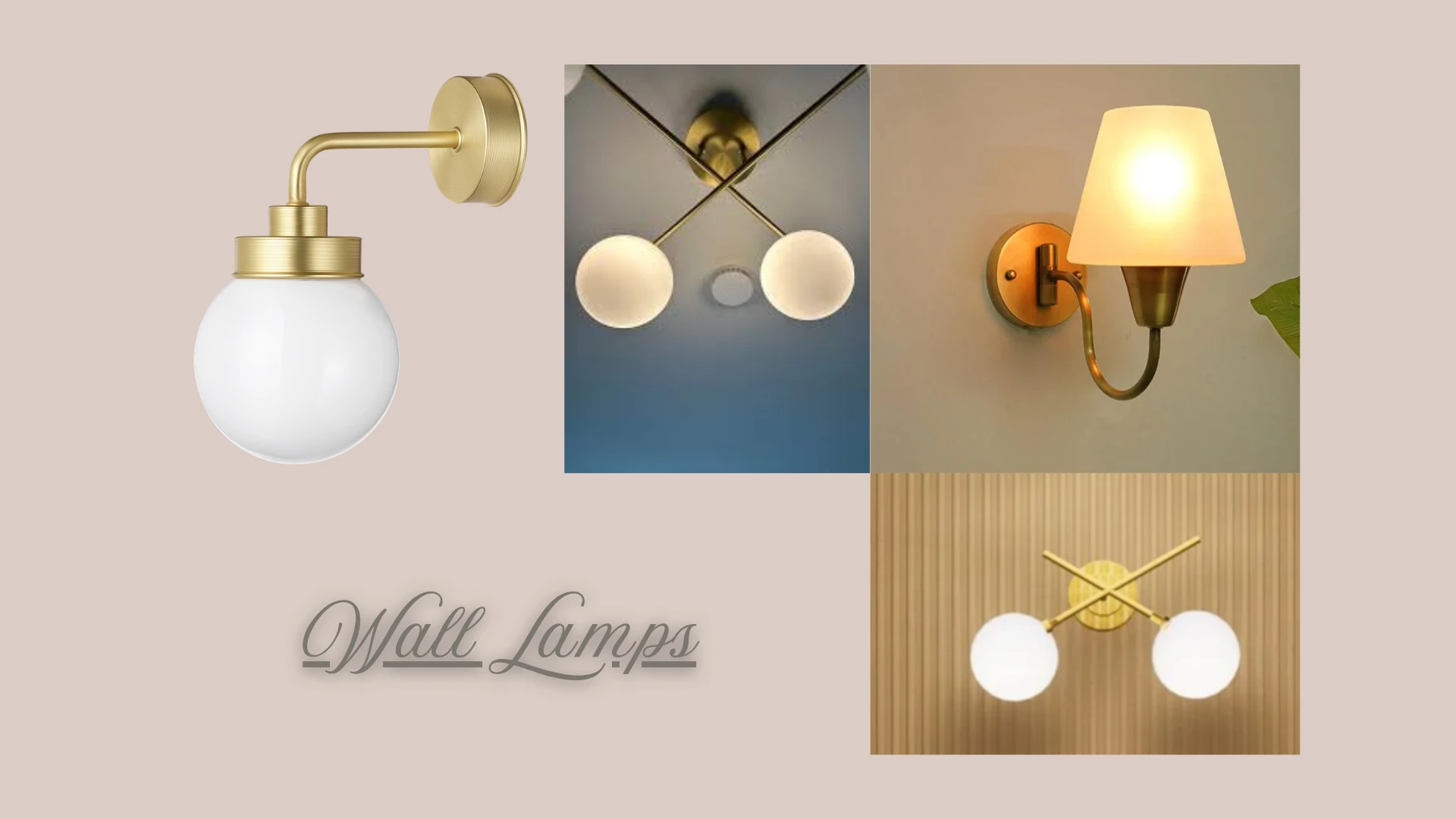
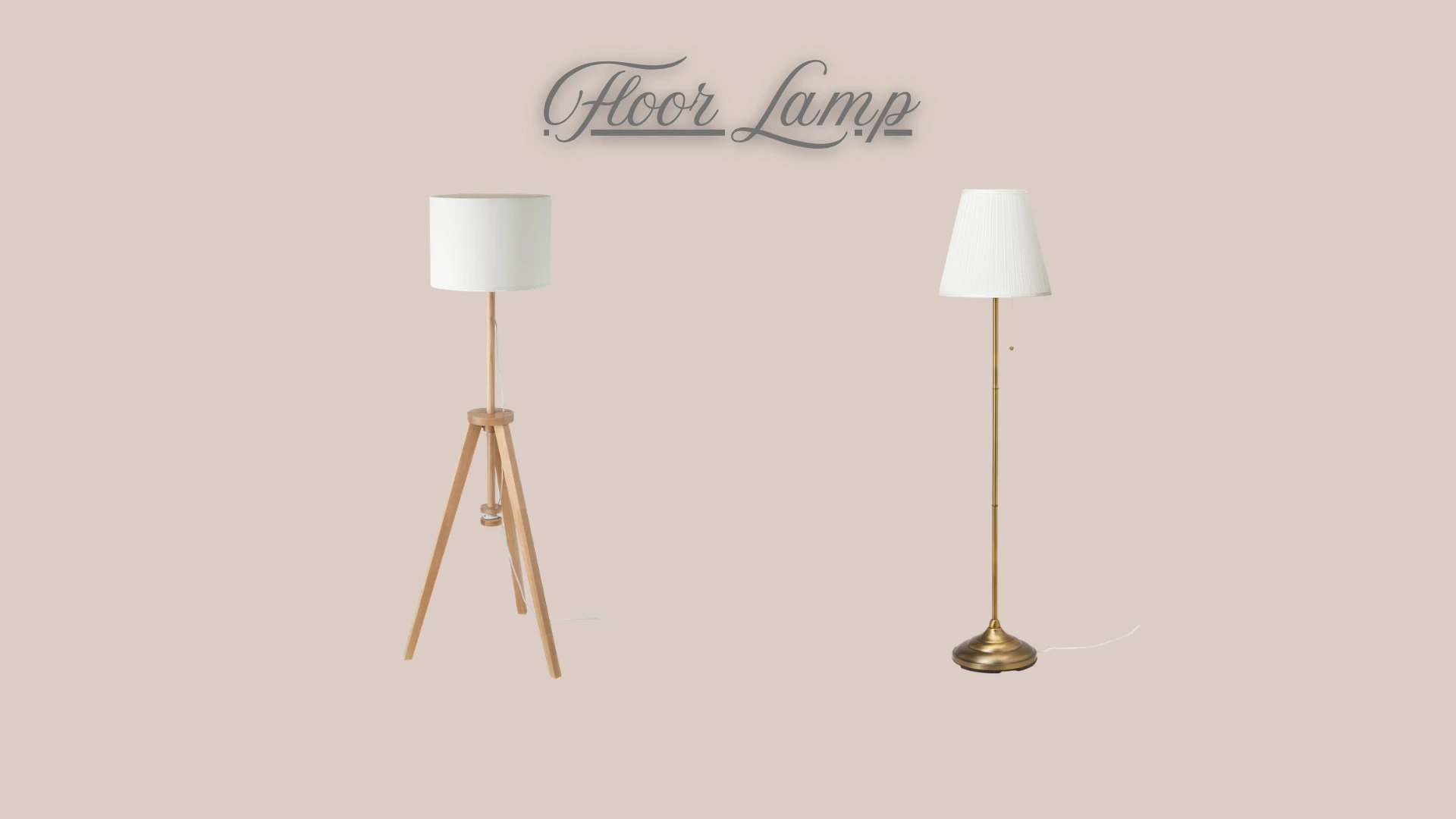
Floor lamps, wall sconces, decorative fixtures, and accent lights become visible elements within the composition itself.
These practical lights introduce warmth, depth, and realism while helping backgrounds feel lived-in rather than staged.
Their soft glow creates emotional intimacy that cannot be achieved through studio lighting alone.
Production Lighting
Dedicated filming equipment can then be introduced without fighting the architectural lighting design.
Because the environment already contains balanced light distribution, production lighting becomes easier to control and significantly more flattering for subjects.
This integrated approach reduces setup time while maintaining professional visual quality.
Furniture Designed Around Conversation
Podcast studios are ultimately spaces for communication.
Furniture therefore influences much more than comfort.
It determines posture, eye contact, framing, camera angles, and the emotional tone of every conversation.
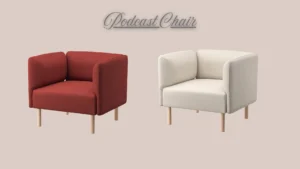
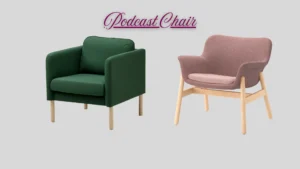
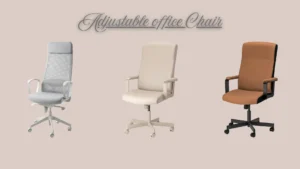
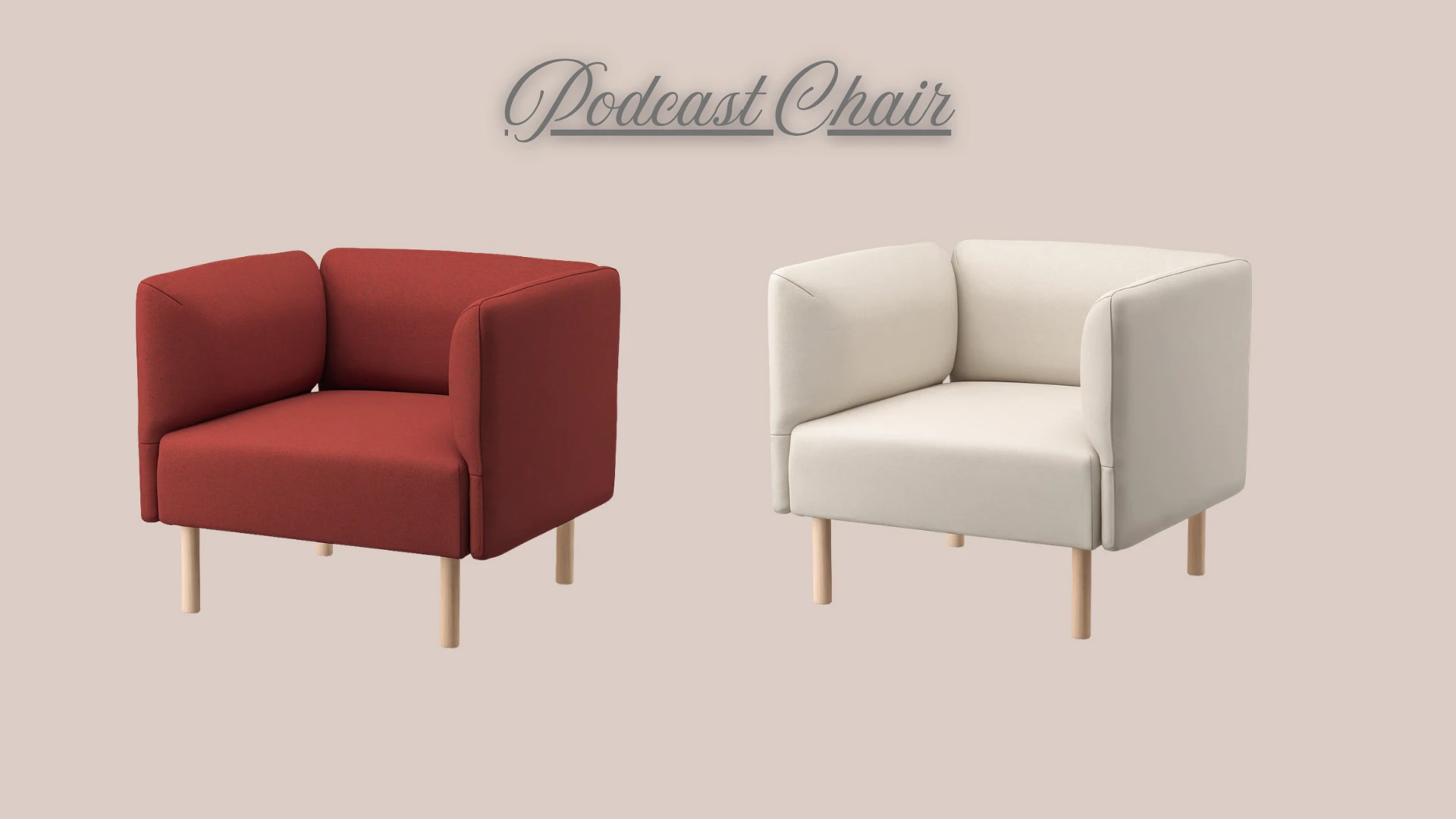
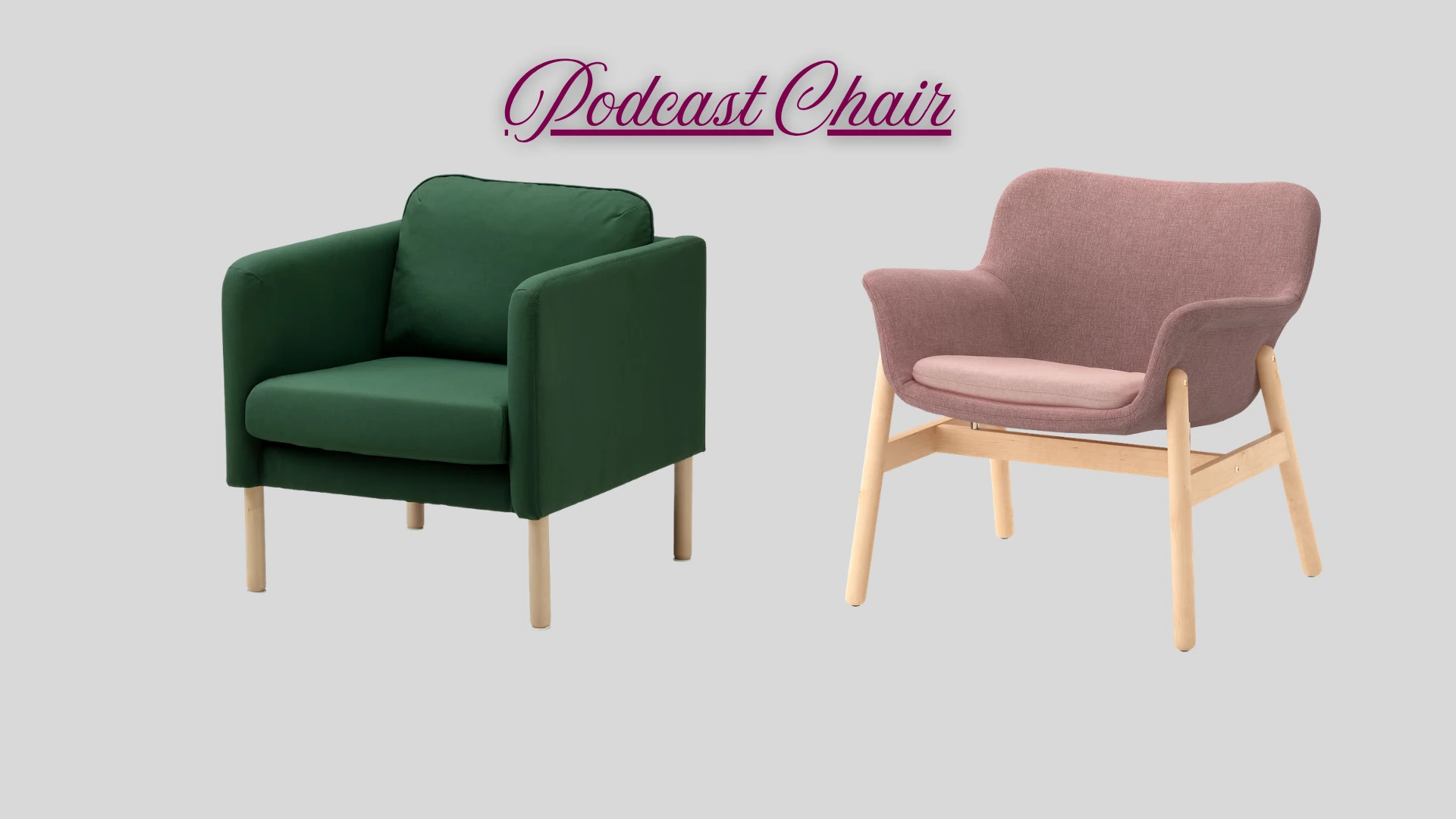
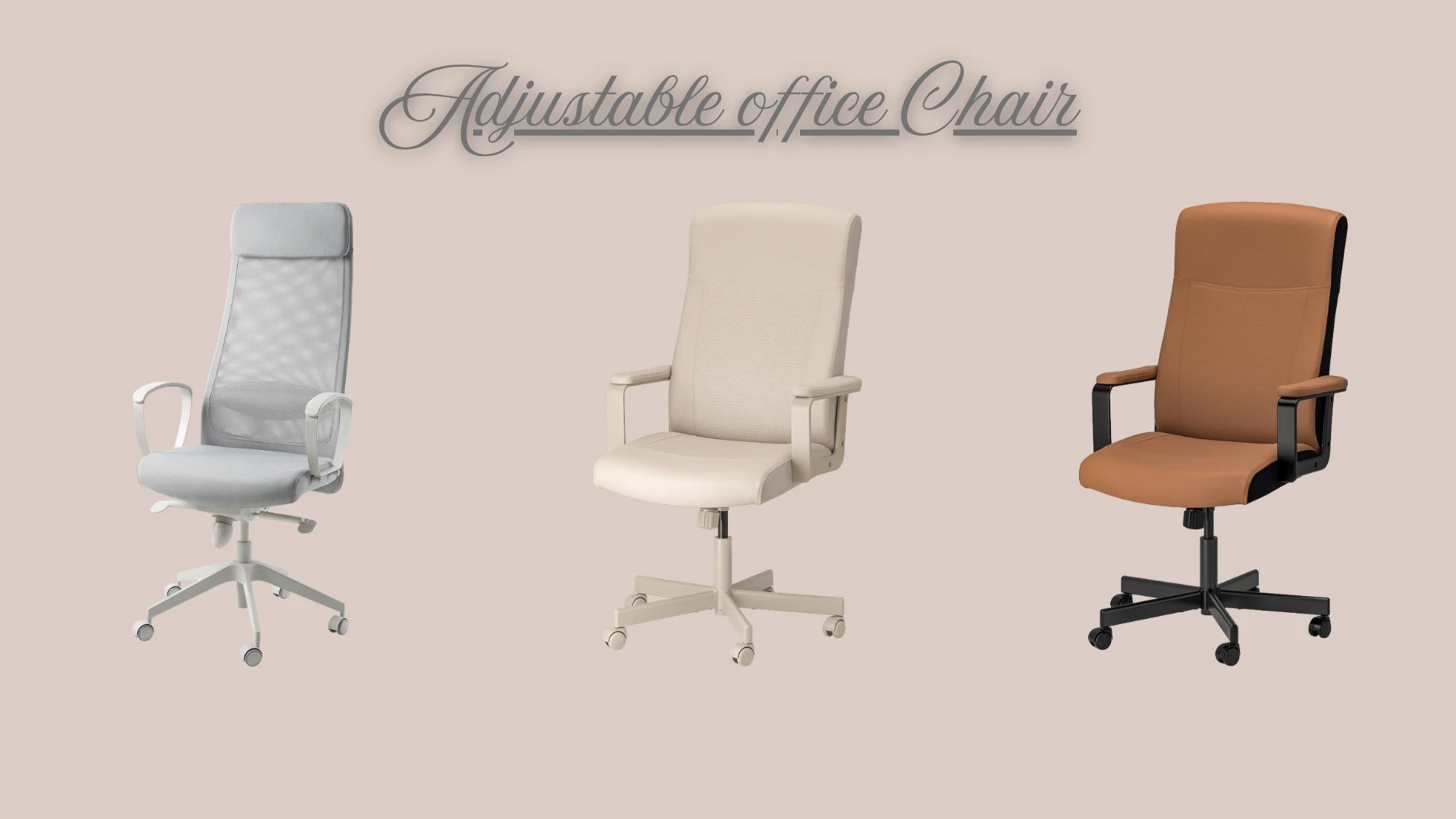
The seating selected for this project encourages relaxed body language while maintaining an upright posture suitable for professional recordings.
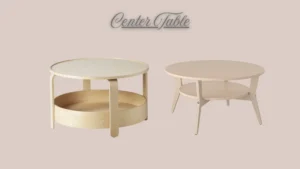
Coffee tables were scaled to create visual balance without obstructing movement.
Furniture spacing supports natural interaction while preserving clean camera compositions from multiple perspectives.
Nothing feels forced.
Nothing appears oversized.
Everything exists in proportion to the recording experience.
Decorative Styling With Purpose
Decoration should never become distraction.
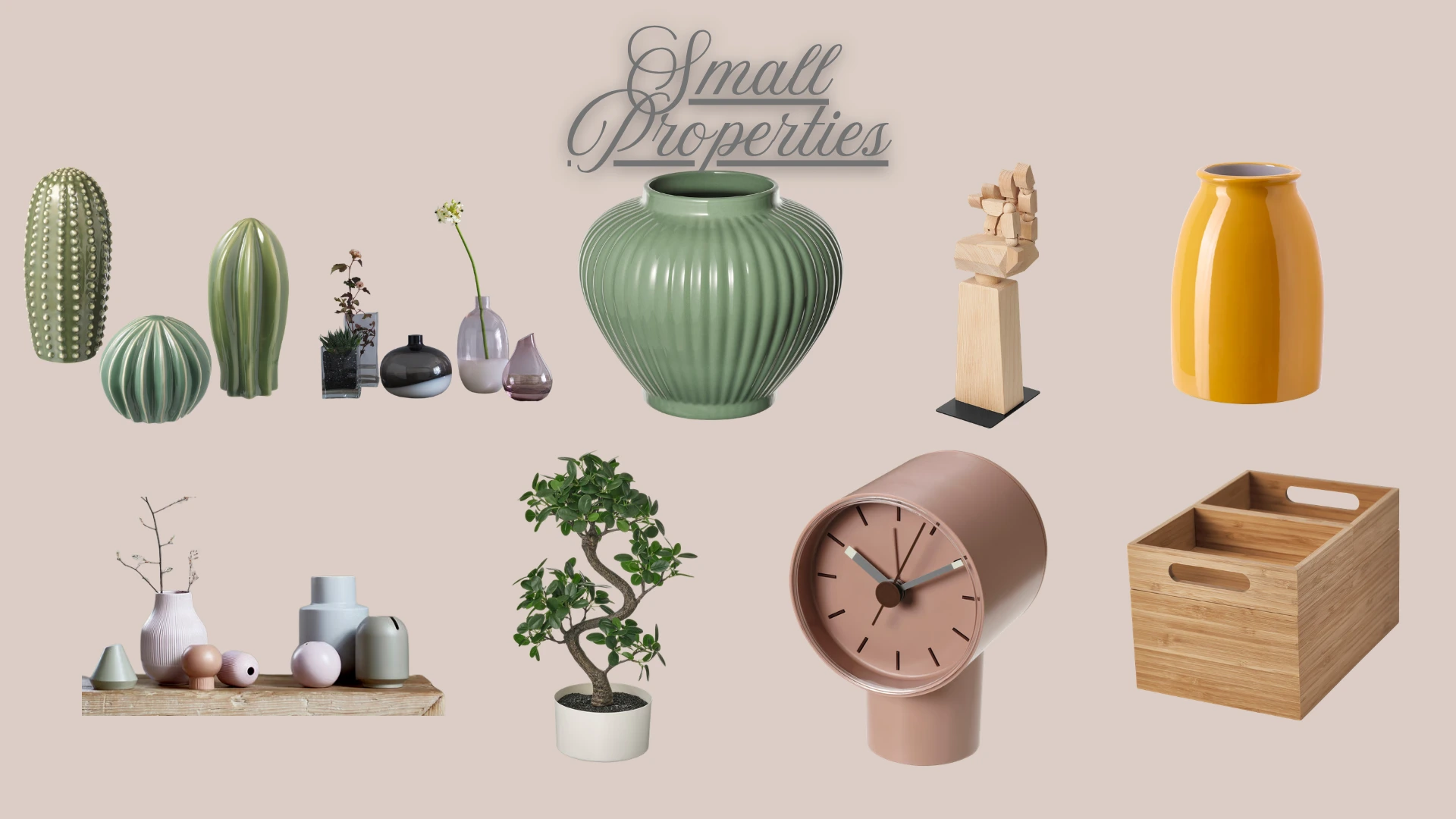
Every styling element within the studio was selected to reinforce the visual narrative while maintaining clarity throughout the frame.
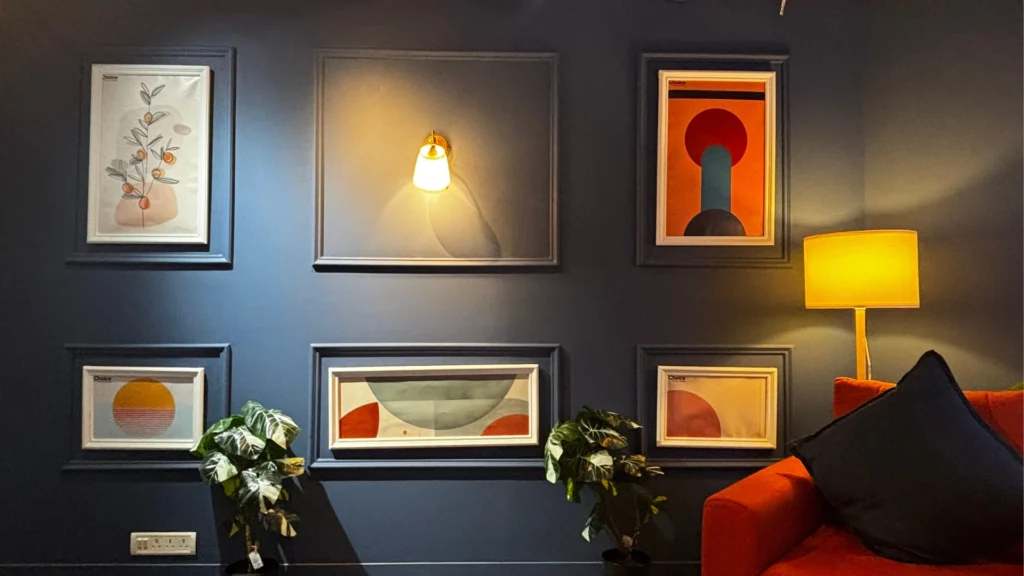
Artwork introduces colour without overwhelming the speaker.
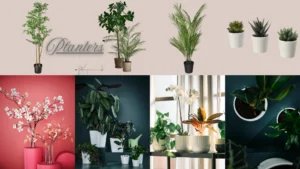
Plants soften architectural edges while adding organic texture.
Shelving creates visual rhythm.
Books and curated objects introduce personality.
Architectural mouldings add depth through subtle shadow rather than excessive ornamentation.
Instead of filling empty space, every decorative decision contributes to atmosphere.
This restraint allows the studio to remain visually interesting even after hundreds of hours of recorded content.
A Studio That Adapts To Different Formats
Modern creators rarely produce just one type of content.
The same environment must support multiple production formats without extensive rearrangement.
This studio was therefore planned to accommodate:
- Podcasts
- Founder interviews
- Executive discussions
- Educational courses
- Product launches
- Brand campaigns
- Corporate communication
- Live streaming
- Social media videos
- Long-form YouTube content
- Panel discussions
- Guest conversations
By designing flexible compositions rather than fixed recording positions, the environment continues to evolve alongside the client’s growing content strategy.
The Final Experience
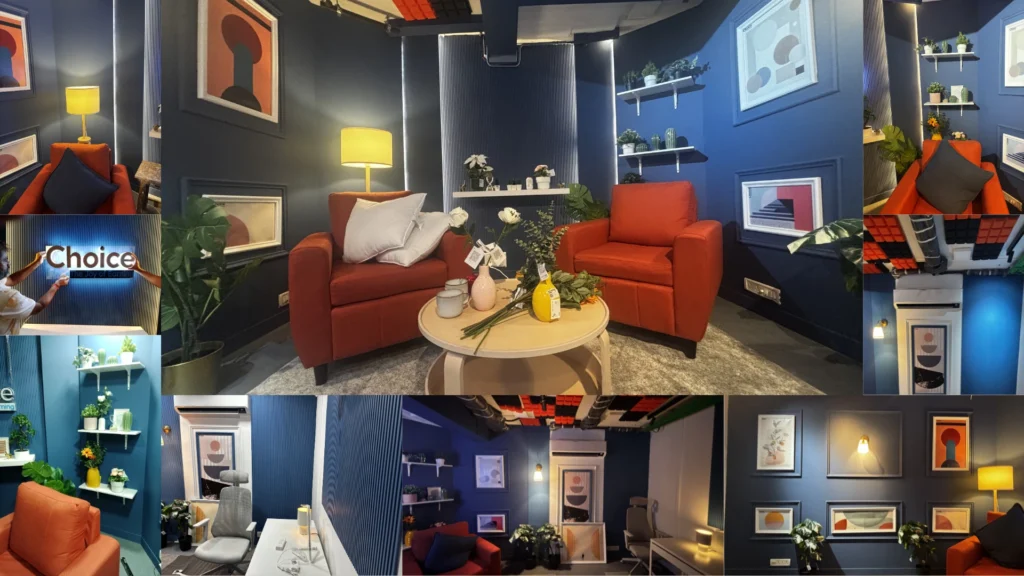
Walking into the completed studio feels noticeably different from entering a conventional office.
The surrounding workplace disappears.
The atmosphere immediately becomes calmer, quieter, and more focused.
Warm pools of light balance the richness of the blue walls.
Natural textures soften the architectural structure.
Artwork and greenery create visual rhythm.
Acoustic control allows conversations to feel intimate.
Every detail works together to create a space where creators feel comfortable speaking naturally.
That confidence ultimately translates into stronger content.
Because the best production environments are rarely the ones viewers notice first.
They are the ones that allow the story, the people, and the ideas to take centre stage.
The Finished Studio
The completed studio successfully transformed an underutilised office space into a dedicated content production environment where creators, founders, and business leaders can record with confidence.
Every aspect of the studio was designed to improve the production experience while maintaining the visual quality expected from modern digital content.
The finished environment now supports:
- Long-form podcast recording
- Executive interviews
- Founder conversations
- Educational video production
- Corporate communication
- Product launches
- Thought leadership content
- Branded storytelling
- Social media production
- Multi-camera video recording
Rather than functioning as a conventional meeting room, the studio has become an active communication asset for the organisation.
By combining production design, acoustic planning, and studio design into one integrated solution, the space now supports both day-to-day business communication and long-term content creation strategies.
Why Modern Businesses Need Creator Studios
The way businesses communicate has changed dramatically.
Customers, investors, employees, and communities increasingly expect brands to communicate through video rather than static presentations or written documents.
Podcasts, interviews, educational series, product explainers, webinars, founder conversations, and thought leadership content have become part of everyday business communication.
As production becomes more frequent, temporary recording setups quickly become inefficient.
Meeting rooms are rarely designed for filming.
Open offices introduce unwanted distractions.
Improvised backgrounds reduce production quality.
Audio inconsistencies weaken the viewing experience.
A dedicated creator studio eliminates these challenges by providing a controlled production environment where teams can record consistently without rebuilding the setup for every shoot.
More importantly, it allows organisations to develop a recognisable visual identity across all video content.
Every frame becomes an extension of the brand.
Why This Project Represents Set Craft’s Approach
Every project completed by Set Craft begins with the same philosophy.
We do not simply design attractive spaces.
We design environments that solve production challenges.
Whether the project involves an advertising film, creator studio, podcast space, experience centre, or branded environment, every decision is evaluated through three essential questions:
Does it support the story?
Every environment should strengthen communication rather than compete with it.
Does it support production?
Lighting, circulation, acoustics, camera movement, and workflow should make filming easier—not more complicated.
Will it remain relevant over time?
The strongest production environments are not trend-driven. They are flexible, timeless, and capable of adapting to changing creative requirements.
This project reflects that philosophy at every stage—from concept development and acoustic planning to construction, styling, and the final recorded frame.
Explore Related Services
This project is one example of how Set Craft combines production design with technical planning to create purpose-built environments for content creation.
If you’re planning a similar project, explore our specialised services:
→ Production Design Services
Discover how we create cinematic environments for advertising films, branded content, experiential spaces, and commercial productions.
Internal Link → Production Design Services
→ Studio Design Services
Explore our approach to designing podcast studios, creator spaces, YouTube studios, photography studios, and corporate content environments.
→ Production Design Services
Explore our wide range of Production Design Services across cinematic spaces.
→ Advertising Film Production Design
See how production design principles translate across advertising campaigns, branded storytelling, and cinematic commercial productions.
Related Projects
Continue exploring our work.
Display four project cards.
Choice FinX Studio
Podcast Studio Design
Vivo Wedding Films
Production Design
Realme Karaoke Experience
Experiential Production Design
Frequently Asked Questions
What is the difference between Studio Design and Interior Design?
Studio Design focuses on creating environments that perform for photography, filmmaking, podcasts, broadcasting, and digital content production. It considers production workflow, camera angles, lighting, acoustics, and equipment integration in addition to interior aesthetics.
Do you design podcast studios?
Yes.
Set Craft designs podcast studios for businesses, creators, educational institutions, production companies, and corporate offices.
Each studio is tailored to the client’s production requirements, branding, and available space.
Do you also execute the construction?
Yes.
We provide complete design and execution services, including planning, production design, acoustic strategy, fabrication, installation, interior styling, and final project delivery.
Can an existing office be converted into a recording studio?
Absolutely.
Many organisations already have suitable spaces that can be transformed into high-performance creator studios through careful planning, acoustic treatment, lighting integration, and production-focused design.
Do you provide soundproofing as part of the project?
Yes.
Where required, our studio projects include soundproofing strategies alongside acoustic treatment to improve recording quality while reducing unwanted external noise.
Can the same studio support multiple content formats?
Yes.
Our studios are designed to accommodate podcasts, interviews, educational content, YouTube productions, webinars, founder conversations, product videos, and other commercial content formats without requiring major reconfiguration.
Let’s Build Your Studio
Whether you’re planning a podcast studio, YouTube studio, corporate content room, interview space, or branded creator environment, Set Craft designs production-ready spaces that combine aesthetics, acoustics, functionality, and storytelling into one cohesive experience.
Every studio is developed around the way content is actually created—balancing production efficiency, technical performance, and timeless design to support years of high-quality content creation.
If you’re looking to build a professional recording environment that reflects your brand and performs beautifully on camera, we’d love to discuss your project.
Button