
Set dressing is one of the quietest parts of production design—and one of the easiest to underestimate. A room can have the right walls, furniture and colour palette, yet still feel unfinished on camera. What makes it believable is often the evidence of use: the objects people leave behind, the way surfaces are occupied, the imbalance between order and disorder, and the small clues that suggest who belongs there.
For advertising films, this becomes especially important because the audience has very little time to read a space. A few well-chosen objects can communicate profession, routine, class, age, mood or personality before the dialogue does. The goal is not to fill every empty surface. It is to make the environment feel specific enough that the performance appears to be happening inside a real world.
What is set dressing in film?
Set dressing is the selection and placement of the visible objects that make a film environment feel inhabited and specific. It includes furniture accessories, books, files, tableware, clothing, practical lamps, artwork, tools and other non-structural details chosen around character, activity, continuity and the camera frame.
Set dressing is not the same as decoration
Decoration usually starts with appearance. Set dressing starts with behaviour. A production designer asks: who uses this table, what happened here five minutes ago, what would naturally be left within reach, and which objects should be visible from the camera position?
That difference is why the most useful props often feel ordinary. Notebooks, pens, trophies, kitchenware, clothes, product bottles or a bedside lamp may not seem visually dramatic on their own. Their value comes from how they explain the space.

Props should explain activity
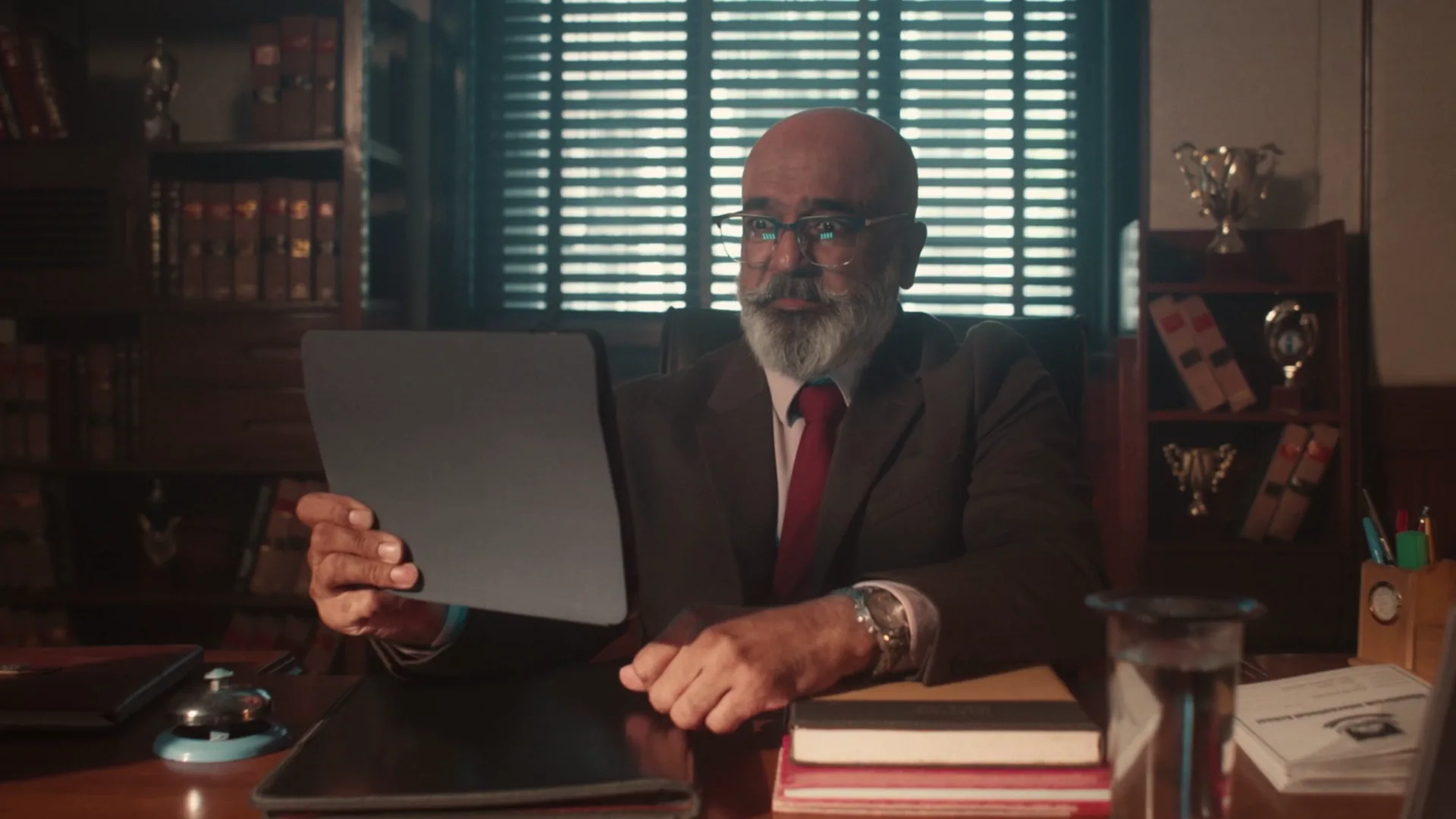
A useful way to judge a prop is to ask whether it tells us something about what happens in the room. In School AI by Coschool, the staff room is not dressed with generic office décor. It is built around the texture of a working day: stacked notebooks, files, a noticeboard and small stationery objects.
The principal’s office uses another language. Darker timber, books, trophies and controlled desk objects create institutional weight. The home dining scene then shifts again—to tableware, fruit, glasses and kitchen objects. The same film moves through three environments, but the objects prevent those spaces from feeling interchangeable.

Controlled imperfection makes a space more believable
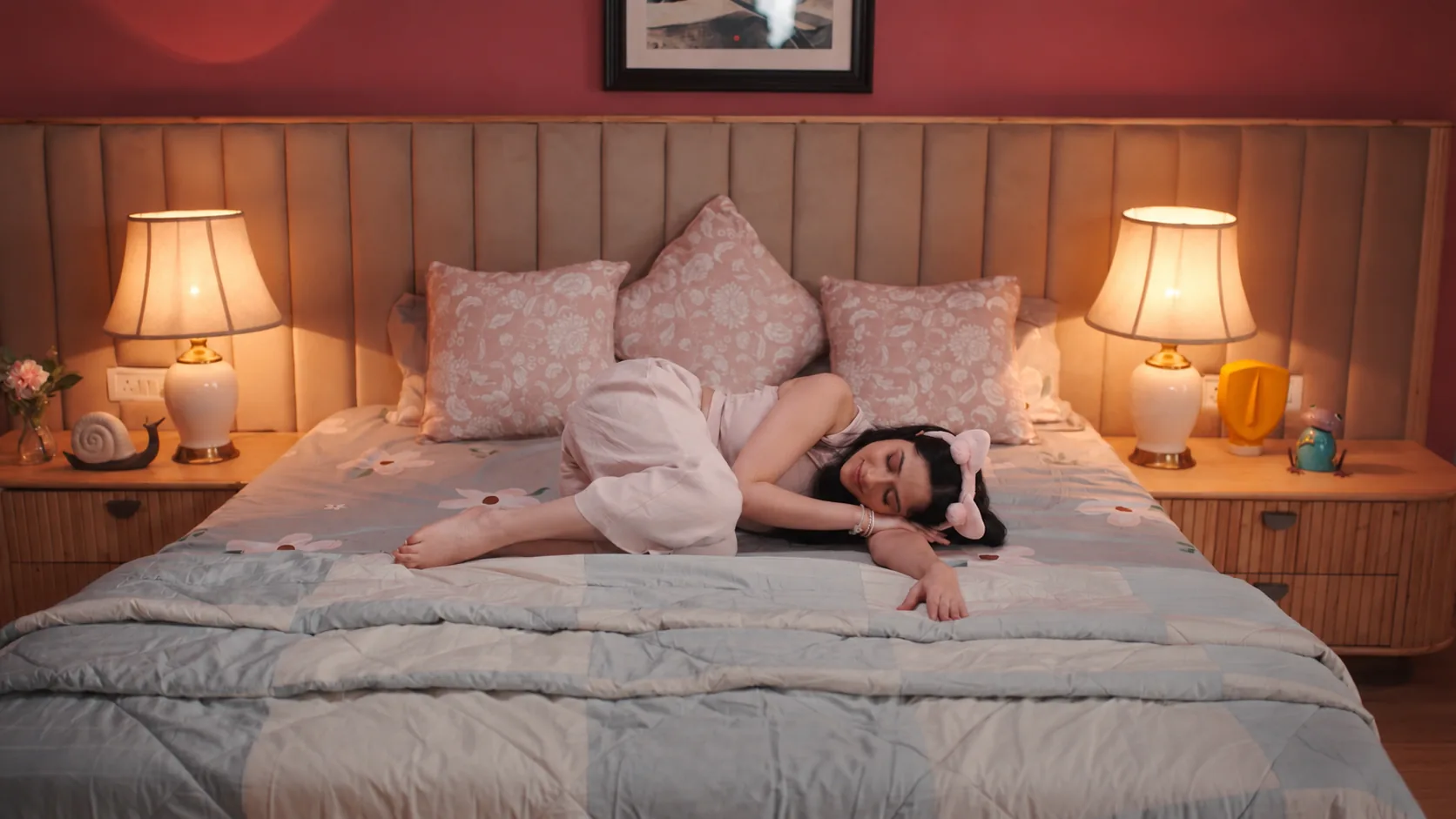
Perfect symmetry can make a set look newly installed rather than inhabited. Real spaces usually contain slight imbalance: one bedside table carries more objects, a book sits at an angle, a cushion has shifted, or a chair is not perfectly centred.
The trick is to control that imperfection. Too little and the space looks staged. Too much and the frame becomes noisy. In the Purrfeto advertising film, paired lamps and bedside units create a clear structure, but the smaller objects on each side are not identical. That keeps the bedroom composed without making it feel like a showroom.

Foreground, middle ground and background all need information
Set dressing becomes more cinematic when it is planned in depth rather than only against a wall. The foreground may carry a table edge, cushions or a plant. The middle ground supports the performer. The background holds shelving, practical lights, framed graphics or another room.
This layered approach helps a camera frame feel richer without making every object equally important. It also gives the cinematographer choices: a prop can become a foreground mask, a practical lamp can create a pool of warm light, or shelving can extend depth behind an actor.

Different environments need different prop density
There is no single correct amount of dressing. A barbershop can carry more visible equipment, mirrors, grooming products and work surfaces because those objects are part of its function. A calm family living room may need far fewer elements because the visual story comes from furniture, colour and relationship between people.


The useful question is not “Does this surface look empty?” but “Would another object improve the story or weaken the hierarchy?” That distinction prevents the set from becoming visually busy simply because there is space to fill.
Colour can connect separate props into one visual system
Props do not need to match, but they should belong to the same visual world. Colour is one of the easiest ways to connect unrelated objects. A mustard cushion can echo timber in the background. A terracotta lamp can repeat a wall accent. Green foliage can soften the transition between cool cabinetry and warm furniture.
This is why prop selection should happen alongside the colour and material palette, not after the set is “finished.” If all the hero colours are already fighting for attention, prop dressing has nowhere to go. A quieter base gives smaller objects room to create rhythm.
Personal objects work best when they support the narrative
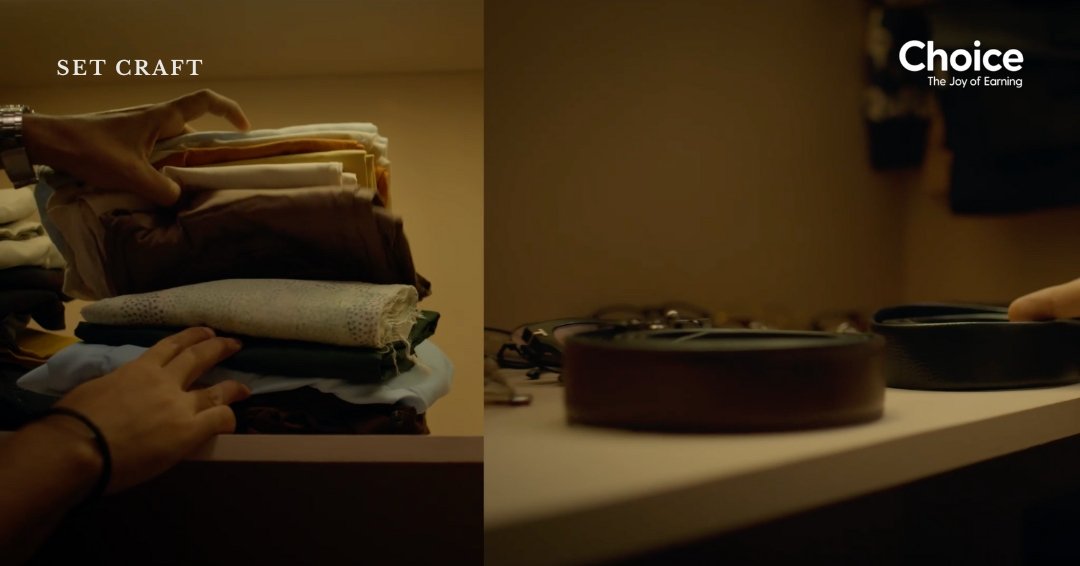
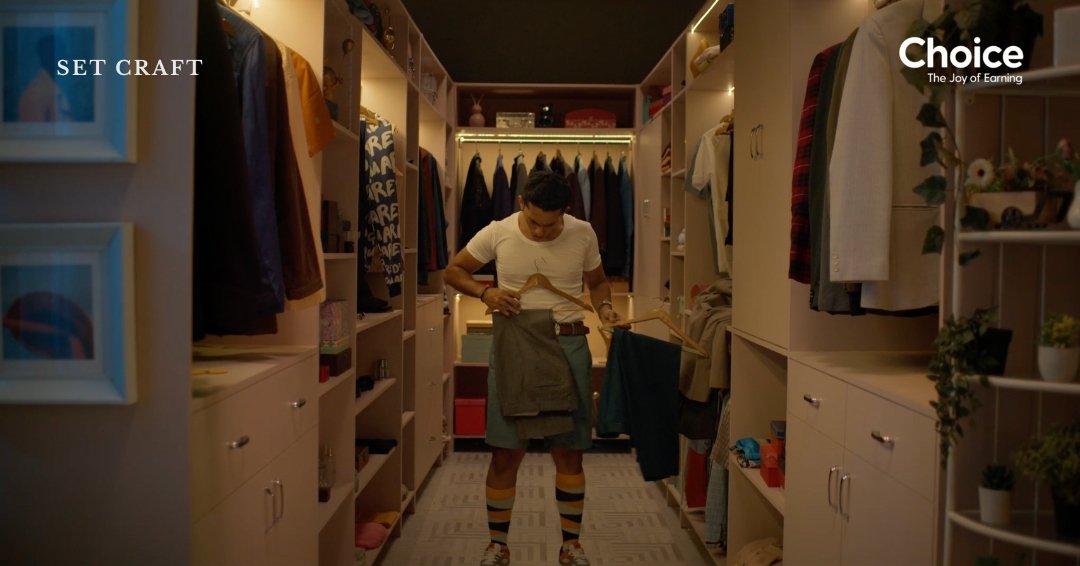
Wardrobes and dressing spaces make this especially clear. In the Choice FinX walk-in closet, folded clothes, hanging garments, bags, shoes and accessories are not decorative filler. They explain the function of the room and support the story of choosing what to wear.
How we decide what stays in the frame
A practical set-dressing edit can be reduced to a few questions:
- Does the object explain the person or activity? If not, it may be decorative noise.
- Is it visible from the intended camera angle? A prop outside the frame should not receive disproportionate time or budget.
- Does it support the colour hierarchy? Strong accents should be intentional.
- Does it create useful depth? Foreground and background objects can help composition even when they are not story props.
- Will it survive continuity? Objects touched by performers need repeatable positions across takes.
- Does it compete with the product or performance? If yes, it should probably move, reduce or disappear.
Set dressing should disappear into the story
The strongest set dressing rarely announces itself. It makes a room feel inevitable. The audience believes the teacher works there, the family eats there, the character chooses clothes there, or the barber actually uses that workstation.
For production design, that is the point: not to make every object noticeable, but to create enough visual evidence that the environment supports the story without asking for attention.
Explore more finished environments in the Set Craft Visual Archive, see individual project breakdowns in Projects, or learn about our art direction and set dressing service.
Planning a film environment?
If you are developing an advertising film or branded-content shoot, share the script, references, location and production dates with Set Craft. We can develop the production design, art direction and set dressing as one visual system rather than separate last-minute layers.
Continue exploring Set Craft